Get Full Government Meeting Transcripts, Videos, & Alerts Forever!
Get email alerts on the Digital Privacy Children topic
No spam. Unsubscribe anytime.
House advances social media rules for minors after floor fights over age, privacy and threat reporting
Summary
Lawmakers on the Minnesota House floor amended and debated House File 4138, which would require transparency about age-estimation processes, default privacy protections for child accounts and reporting of articulable threats to state public-safety partners. An amendment to raise the age to 18 failed; other amendments tightening threat reporting and requiring reporting to the state fusion center were adopted after close roll calls.
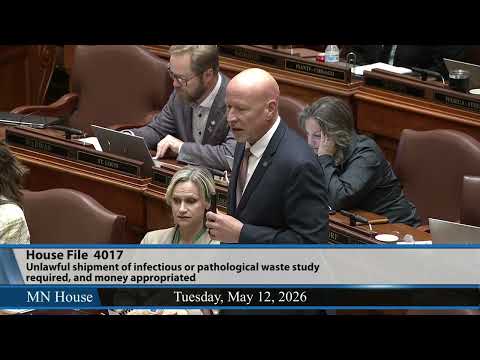
The Minnesota House spent an extended floor period amending and debating House File 4138, a bill that would set requirements for social-media platforms with respect to accounts for minors, including transparency around age-estimation, default privacy settings and limits on use or sale of data collected for age determination.
Representative Scott (Anoka), the bill sponsor on the floor, explained amendment A10, which adds transparency requirements about platforms’ age-estimation processes, sets a revenue threshold for covered platforms at $1,000,000,000 in total revenue and establishes a 10,000-account threshold for Minnesota-based account holders. He said the amendment also makes privacy settings the default for child accounts.
Representative Bonner (Hennepin) offered amendment A11 to substitute the bill’s 16-year threshold with an 18-year “minor” definition tied to Minnesota statute, arguing that the higher threshold would better protect 16- and 17-year-olds and strengthen the state’s legal position. Bonner said the change would align protections with other legal age-based restrictions and pointed to potential harms when young people shift to adult accounts. Representative Scott and other opponents warned that changing the age to 18 could invite First Amendment challenges and that the bill’s delayed effective date (July 2027) left time for further work. On the roll call the A11 amendment failed, 15 yays to 111 nays.
Floor debate then focused on amendments to improve threat reporting and public-safety coordination. Representative Smith (Olmsted) proposed language directing platforms to report articulable threats to the Minnesota fusion center; Representative Myers moved an amendment to that amendment narrowing scope to Minnesota incidents, requiring review of publicly available user-generated content and adding provisions for immediate reporting. That amendment to the amendment passed on a roll call, 83–47. Representative Greenman later offered an amendment linking the threat-reporting work to broader gun-violence prevention and urging the House to consider the comprehensive Senate gun-violence bill (Senate File 4067); the floor vote on an amendment to the amendment was extremely close and recorded as 67–66 in favor, with a later clarification and procedural points about roll-closing noted on the record.
Supporters described the package as a step to protect children’s privacy, reduce harms from addictive design features and give public-safety agencies better information to intervene on credible threats. Opponents argued some provisions had not had full committee vetting and warned of constitutional and logistical concerns about mandated content review and reporting.
Several amendments were adopted and recorded on the floor; a number of members urged further hearings and committee work in subsequent sessions. The House then recessed to the call of the Speaker amid procedural motions and additional requests for roll calls.