Get Full Government Meeting Transcripts, Videos, & Alerts Forever!
Get email alerts on the Economic Development topic
No spam. Unsubscribe anytime.
Council, CIC and downtown property owners review façade enhancement program and application process
Summary
Council discussed a proposed Community Improvement Corporation (CIC)‑administered downtown façade enhancement program that would reimburse up to 50% of eligible façade work (maximum award discussed as $10,000 per property), and members of the public and council asked for clearer application cycles, documentation requirements, and rules on paying for owner labor or materials.
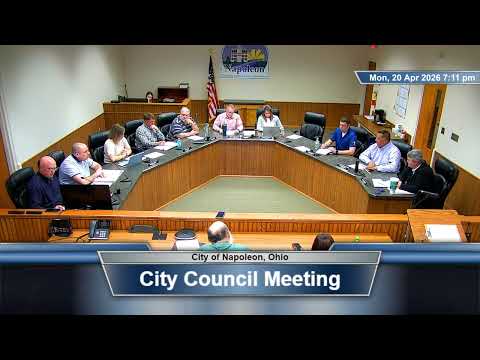
Council spent a substantial portion of the meeting reviewing a proposed downtown façade enhancement program drafted by the city manager and to be administered by the Community Improvement Corporation (CIC). The program’s stated purpose is to encourage private reinvestment in the downtown area by reimbursing eligible façade improvements visible from the public right‑of‑way.
Staff described eligible areas (a defined downtown map and preservation district), eligible improvements (masonry repair, repointing/tuckpointing, storefronts, awnings, painting and other visible façade work), and a funding structure that would reimburse up to 50% of documented, paid eligible costs. The packet proposed a maximum award of $10,000 per property per program cycle and required receipts and proof of payment because the program is structured as a reimbursement.
Council and the CIC’s representative (Jen) discussed administrative details: whether applicants could be reimbursed for their own labor (the council asked that owner labor not be reimbursed, but material receipts could be considered), whether the program should require applicants to be current on taxes and utilities, and how often the application cycle should run (several council members recommended one cycle per program year to simplify administration). A CIC representative said the intent was to keep the application short and practical; staff suggested a one‑year or program‑year term with extensions possible by request.
Several downtown property owners spoke from the audience. One owner said he learned of the program on the radio and urged streamlining of the application process, describing an earlier experience of waiting years for a decision on a different downtown program. Contractors’ estimates for tuckpointing were discussed (one owner cited estimates in the $8,000–$12,000 range). Council members emphasized checks to avoid awarding funds to owners who are delinquent on taxes or utilities and noted the program is meant to reward businesses that have maintained compliance.
Next steps: staff and several council members volunteered to refine the draft language, add clarity on one‑year cycles, payment and documentation, and routing of approvals (recommendation to have CIC review and then council approval as appropriate). The council did not finalize or adopt the program at this meeting; it returned the draft to staff and committee refinement.