Get Full Government Meeting Transcripts, Videos, & Alerts Forever!
Get email alerts on the Land Use Planning topic
No spam. Unsubscribe anytime.
Planning staff outline housing code updates, master‑planning and DOA funding risks
Summary
San Miguel County planning staff reported on permit trends, pending code amendments, an accelerated housing review and a proposed down‑valley master plan; staff warned state DOA grant cycles and water‑infrastructure costs could increase total project estimates.
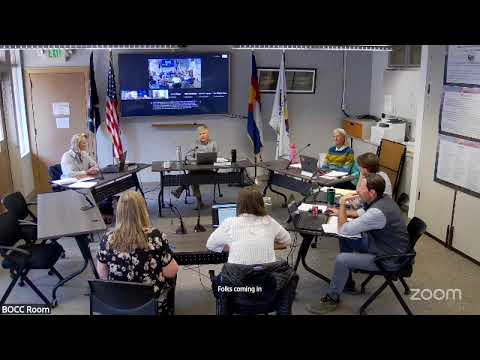
County planning staff presented a comprehensive update on development activity and upcoming code work at the April 22 meeting, flagging three priorities: code amendments tied to housing and natural resources, an accelerated housing review, and a proposed San Miguel Canyon (down‑valley) master plan.
The department reported an annual average of about 100 development permits (new construction and remodels) and roughly 40–50 land‑use applications per year. Staff attributed recent shifts from new‑build toward additions and remodels to higher interest rates and increased material and labor costs. Wetland special‑use permits and subdivision exemptions remain common land‑use items.
On code work, planning staff said mining regulations were adopted in January 2026, short‑term rental amendments are active, and a draft accelerated housing review is out for agency comment with planning commission review slated for May 14 and a Board of Commissioners hearing in early June. The department expects to work on natural‑resources regulations and a housing code update this year, followed by district‑level zone work.
Staff recommended developing a San Miguel Canyon master plan (down‑valley) that would pick up where the East‑End plan left off, with subareas for Placerville, Sawpit and the Sawpit/Saw Pit corridor. The county expects much of the core outreach and plan work in 2027 if grant timing and consultant selection proceed as outlined; estimated total costs were discussed in a broad range ($80,000–$200,000) because the scope could include water and wastewater engineering.
Staff warned that DOA funding availability is constrained by state budget dynamics and that the DOA advisory cycle had fewer funding cycles this year; a portion of the state’s available bucket had been projected for other needs. Staff said they will return with funding‑source recommendations and requested direction about whether the Board wishes to accelerate projects with increased county match.
The department also discussed the state water‑supply element requirement (previously scheduled) and recommended further exploration of potential consequences of missing the deadline, noting withholding of certain grant funds as the most likely enforcement mechanism. Planning staff concluded by asking commissioners for guidance on prioritization given limited grant predictability.