Get Full Government Meeting Transcripts, Videos, & Alerts Forever!
Get email alerts on the Utilities topic
No spam. Unsubscribe anytime.
Presenter says Energy Southeast deal keeps Alexander City electric rates stable through 2035
Summary
An Energy Southeast representative told the Alexander City council the joint-action agency's contracts and programs have produced long-term rate stability, funded smart-meter upgrades and scholarships, and expanded capital loans to attract industry to the city.
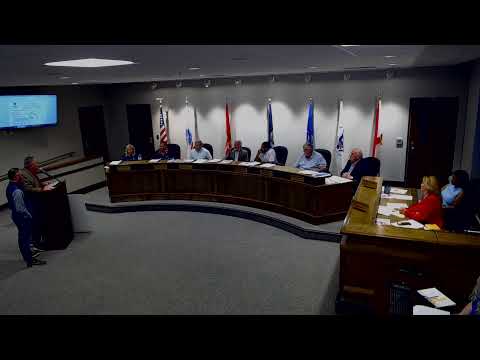
An Energy Southeast representative told the Alexander City council during a work session that the joint-action agency formed by Alabama cities has helped keep the city's wholesale electric costs low and stable, and that a recently signed contract will maintain that stability through 2035.
The presenter, identified as the president and CEO of Energy Southeast, said the agency has avoided wholesale rate increases for member cities since 2011 and that Alex City's rates are ‘‘some of the lowest in this region’’ compared with Alabama Power. He said members have contracts for capacity, energy and transmission that underpin that reliability and price stability.
Energy Southeast also outlined local benefits it said it provides: a nearly-complete advanced metering infrastructure (AMI) smart-meter project (part of an $8 million multi-city effort), training funds estimated at roughly $25,000 for Alex City, a scholarship program for local customers who attend Alabama schools, and an expanded industrial capital-loan program that raises the per-loan cap to $1 million and the program total to $10 million to help recruit or support new industry.
Why it matters: The city's electric utility is a major revenue source, and claims of long-term rate stability and investment back into local infrastructure affect council decisions about utility oversight, capital projects and economic development planning.
The presenter said the AMI project will let customers track daily energy use and that the agency owns generation assets including a 95-megawatt plant in Sylacauga. He said the agency raised tens of millions during periods of market volatility to build reserves that were later returned to members, and that the agency's recent contract with Southern Power Company and a financial partner will provide continuing rate stability.
Council members asked about board representation; the presenter recommended that the mayor or the city's top official serve as the city's representative on the agency's election committee to streamline communications. He described the nomination process used by member cities and said election-committee representatives typically nominate the member city's board representative.
A council member asked whether the AMI project involved debt; the presenter replied the project was arranged through rates and member support and would not create new debt for the city.
The session also included questions about how training funds and scholarships are allocated. The presenter said the scholarship program provides several $2,500 awards per member city and that eligibility requires attending an Alabama school and being a customer of the Alexander City utility.
The council did not take formal action on the presentation; staff and the presenter left time for follow-up questions and distribution of program materials.