Get Full Government Meeting Transcripts, Videos, & Alerts Forever!
Get email alerts on the Environment Plastic Pollution topic
No spam. Unsubscribe anytime.
Senate designates July 12–18, 2026 as Plastic Pollution Awareness Week
Summary
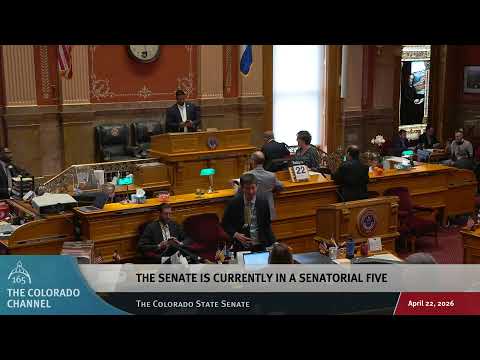
On April 22, 2026 the Colorado Senate adopted Senate Joint Resolution 22 (SJR22), designating July 12–18, 2026 as Plastic Pollution Awareness Week to spotlight micro‑ and nanoplastic risks and disproportionate harms to low‑income communities and communities of color.
The Colorado Senate on April 22 adopted Senate Joint Resolution 22, designating July 12–18, 2026 as Plastic Pollution Awareness Week and urging education and action on plastic pollution and micro‑ and nanoplastics.
Senator Cutter, sponsor of the measure, told colleagues the resolution was prompted by growing evidence of plastic’s environmental and public‑health harms. “Plastic pollution is out of control. It’s clogging our trails and streams in the beautiful mountains and littering our streets,” Cutter said, citing historical production and low recycling rates and warning of potential health risks from microplastics and chemical additives.
The resolution text, read into the record by the clerk, says plastic production has increased dramatically and that microplastics and nanoplastics are ‘‘found in every remote corner of the world’’ and may be distributed to human organs. The measure notes evidence connecting microplastics to human tissues and says emerging research indicates possible negative health effects.
SJR22 also recognizes that plastic products have utility in areas such as healthcare and food safety, and it urges awareness, improved recycling, and coordinated action among communities, businesses, nonprofits and government. The resolution directs that copies be sent to a list of stakeholder organizations named in the text.
The Senate recorded the adoption of SJR22 (clerk’s tally read in session). The resolution passed and sponsors acknowledged partner organizations and guests present in the chamber.
Having passed, SJR22 serves as a formal legislative statement encouraging public education and stakeholder engagement; it does not create new regulatory requirements.