Get Full Government Meeting Transcripts, Videos, & Alerts Forever!
Get email alerts on the Sg Selection topic
No spam. Unsubscribe anytime.
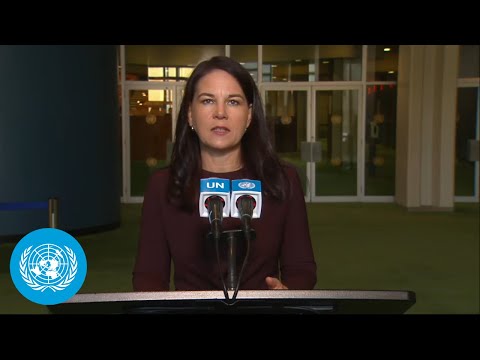
Anna-Lena Baerbock opens interactive dialogues to select next United Nations secretary-general
Summary
Anna-Lena Baerbock, president of the U.N. General Assembly, opened interactive dialogues with secretary-general candidates, stressing transparency, civil-society participation and the need for leadership to meet interconnected global crises. Candidates will face questions from 193 member states.
Anna-Lena Baerbock, president of the United Nations General Assembly, opened interactive dialogues at the United Nations to begin the selection and appointment process for the next secretary-general, saying the choice will "shape the direction of the world's unique multilateral organization."
Baerbock framed the dialogues as a "critical step" in a process that must be transparent and inclusive, citing a revitalization resolution and a joint letter with the president of the Security Council as safeguards for the format. "During the three-hour dialogues, candidates will have the chance to highlight their vision for the United Nations," she said, adding that candidates will answer questions from "193 member states."
The president stressed why the selection matters beyond administration: "Our choice will shape the direction of the world's unique multilateral organization and demonstrate whether the United Nations truly represents the more than 8 billion people around the world who are half women and girls," Baerbock said. She described a decade of global upheaval since the last new secretary-general was chosen — citing shifting geopolitics, rising violence and conflict, an accelerating climate crisis, technological transformation, a global pandemic and widening inequalities — and argued that the next secretary-general must both navigate those challenges and lead reforms to keep the organization fit for the 21st century.
Baerbock highlighted the United Nations' practical work through agencies and programs, saying the U.N. helps provide "everyday access for million of people to clean drinking water, education for children, and even aviation safety for billion passengers every year." She argued that such work underscores the need for "strong and principled effective leadership" to ensure the U.N.'s charter obligations are fulfilled.
She emphasized that the U.N.'s three pillars — peace and security, sustainable development, and human rights — are "deeply interconnected" and said the secretary-general must be their "strongest advocate." Baerbock also urged that civil society be heard in the process, noting an open call that drew organizations worldwide and saying civil-society representatives, both in the room and virtually, "will be heard in the Trusteeship Council alongside member states and observers."
Baerbock concluded by calling the job "one of the toughest" but "one of the most important," linking the leadership choice to defending the U.N. Charter and the international rules-based order. She departed the meeting to convene the dialogues and did not take questions at the time of the remarks.