Get Full Government Meeting Transcripts, Videos, & Alerts Forever!
Get email alerts on the Field House topic
No spam. Unsubscribe anytime.
Consultant says O'Fallon could support an 8-court field house; construction likely needs bonding
Summary
A consultant-led feasibility study presented to the Parks & Environment Committee found strong local and regional demand for a multiuse indoor sports facility and recommended an 8-court, multiuse field house (about 97,000–115,000 sq ft); staff said operations could cover day-to-day costs but debt service would likely require bonds or other funding.
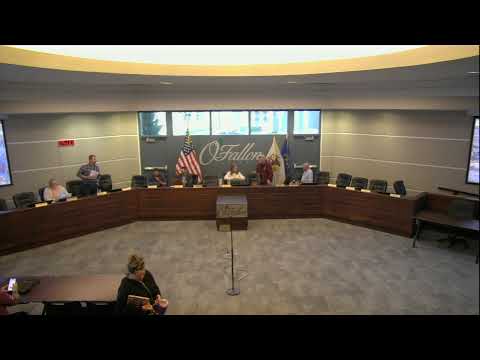
A consultant presented an eight‑month feasibility study to the Parks & Environment Committee that found strong resident and regional demand for a multiuse indoor sports facility, recommending an eight‑court design with indoor turf, a walking track and functional training space if the city can fund a larger footprint.
The presenter said the study—prepared by Ballard King & Associates and Darren Barr—surveyed nearly 1,000 participants and convened focus groups including local sports organizations and schools. The three most requested features were indoor turf, a walking trail and a functional training area. The consultant said the recommended building size ranges between about 97,000 and 115,000 square feet to meet community and tournament needs.
The study modeled several options from a smaller six‑court facility to larger multiuse facilities. According to the presenter, day‑to‑day operations for the recommended options could reach cost recovery through rentals, memberships and programming, but including debt service for construction would be difficult to cover with user fees alone. "If we are going to include the debt service," the presenter said, "it would be hard to cover the debt service and all of the operations with what we charge to use the facility." The presenter advised the council to consider bonding or other funding sources if it wants to build.
Committee members focused questions on likely construction costs, site selection and traffic. The presenter provided a preliminary cost band and next steps: engage the finance team for funding scenarios and ask design consultants (FGM was named) to produce a limited scoping study (staff estimated the next study would likely be under $7,000). The presenter said construction could exceed $20 million and that build costs depend on finish level and construction type.
Consultant Darren Barr of Ballard King, who phoned in for the meeting, said the Sports Park location yields synergies with outdoor turf and tournament traffic but cautioned that locating the facility elsewhere would change which amenities—particularly indoor turf—make sense. He explained the rationale for an eight‑court building as a balance between community programming and attracting regional tournaments that produce hotel and restaurant economic impact.
Public commenters urged the committee to "think 20 years out" and not build a too‑small facility. Jerry Albrecht (Ward 7) said, "Don't cheap out—make something people will be proud of."
Next steps: staff said they will assemble funding scenarios over the summer, consult finance and consider a focused cost estimate from an architecture/engineering firm if the council gives direction to proceed. The committee did not take formal action on the field‑house report at this meeting.