Get Full Government Meeting Transcripts, Videos, & Alerts Forever!
Get email alerts on the School Policy topic
No spam. Unsubscribe anytime.
Central Magnet student tells board: 'What if we're wrong about phones?' and offers a tiered fix
Summary
Central Magnet senior Kyle Carter presented a research-backed thesis arguing the district's cellphone policy is vague, poorly implemented and causes conflict; he proposed emergency-contact zones, allowing phones in lunch/study hall, and an annual feedback loop to evaluate policy effectiveness.
Kyle Carter, a senior at Central Magnet School, told the Rutherford County Board of Education he and his peers believe the district's cellphone policy is badly implemented and that vagueness in wording (for example the term "stored") drives conflict between students and staff.
Carter summarized his findings and two core takeaways: "Remember first the main idea ... and my three recommendations." He told the board that implementation failures, not a phone ban itself, have caused students to perceive unfair enforcement and cited assessment figures drawn from a toolkit he referenced: "14% is how many students are satisfied with our school's phone policy" and "20.5% ... say 0% or never is a policy implemented correctly by Rutherford County employees."
Proposed changes Carter recommended a tiered approach with three immediate steps: (1) designate office spaces as emergency-contact zones (short, tracked phone use for health or urgent contact), (2) permit phone use during non-instructional times such as lunch and study halls, and (3) create a student feedback loop so the policy can be revised after a trial year. He argued lifting restrictions for non-instructional time aligns with practices in neighboring systems and respects students' need to coordinate jobs or family communications.
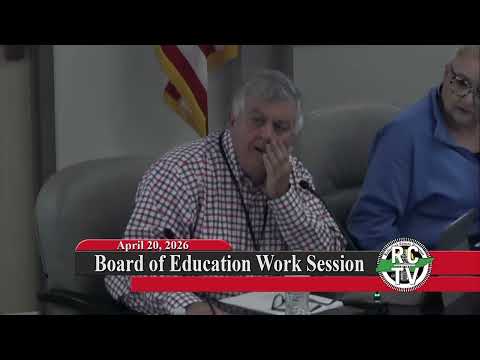
Board reaction Board members praised Carter's presentation for clarity and civility. "Very articulate," Mr. Vaude said, while Mr. Charles urged staff to explore a student feedback mechanism for policy implementation. Several members emphasized that consistent implementation is the key issue, not the policy language alone.
Quoted "What if we're wrong about phones?" Carter asked. "If we're wrong about phones, we as a county need to own up to it and try to fix it."
Ending Staff said they will add the topic to principal and leadership discussions and consider how Carter's recommendations might be piloted and evaluated in the coming school year.