Get Full Government Meeting Transcripts, Videos, & Alerts Forever!
Get email alerts on the Public Comment Cdbg topic
No spam. Unsubscribe anytime.
Nonprofits and small businesses urge Hartford to fund food pantries, workforce and micro-business programs
Summary
More than a dozen speakers at the April 20 public hearing urged the City of Hartford to prioritize CDBG support for food pantries, workforce-readiness programs and small-business technical assistance; requests included specific asks (El Centro $35,000; Catholic Charities Boost $70,000) and calls to expand micro-business services.
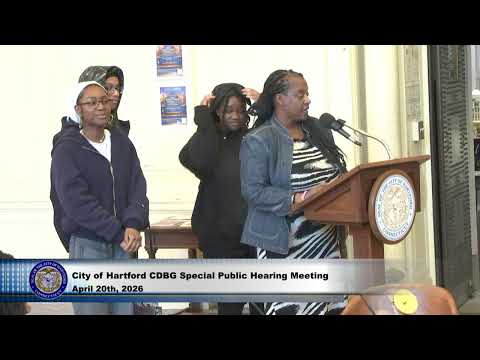
At a City of Hartford CDBG public hearing on April 20, nonprofit leaders, program participants and small-business owners delivered a steady stream of testimony asking the city to fund services that target food insecurity, workforce development and micro-business support.
Nilda Morales, who was introduced as the director of El Centro at the Institute for the Hispanic Family (Catholic Charities), said the organization's food pantry serves more than 700 individuals monthly and asked the council to approve full funding of a $35,000 CDBG request to meet growing summer demand for meals and personal-hygiene supplies.
Eva Lisa Seedo, who said she works with Catholic Charities' Boost program, described Boost as a trauma-informed workforce-readiness initiative that serves about 60 families a year with ESL, mock interviews, job placement and basic needs supports. Seedo urged approval of a $70,000 allocation to sustain those services; several Boost participants gave personal testimony about training, certification and employment outcomes.
Speakers representing Upper Albany Main Street emphasized small-business incubation and digital-literacy training. Beverly Red, executive director of Upper Albany Main Street, said the organization has long provided micro-business supports and metrics to show impact. Several business owners'including Marvin Dale (Dale Renovations), Adrien Dennis (Jamong Supermarket) and street-vendor owner Yaovi Sini (Togo Spice Kitchen)'described concrete benefits from incubator programs, SAM ID assistance, pricing support and connections to vending or hospital contracts.
Dr. William Clark, executive director of International Hartford, described a 14-year micro-business accelerator that works primarily with immigrant and first-generation entrepreneurs and asked the council to increase support so the organization can serve more businesses that typically have $5,000'$25,000 in revenue and limited access to capital.
Miguel Dali, founder of a nonprofit barber shop program (Scissor Society), described plans to expand into a barber academy and workforce pipeline that supports youth and re-entry populations and asked for full CDBG funding to deepen those services.
Dr. Jackie Evans Phillips of Dream Big College and the Emerald House described a 20-week Changemaker program for job preparedness and life skills and brought students who said the program helped them plan careers and complete school without burnout.
No formal votes or allocation decisions were taken during the hearing; council members were told the draft annual action plan will be posted for public comment and that staff will make reviewer materials available for council review before final allocation recommendations are transmitted to HUD.