Get Full Government Meeting Transcripts, Videos, & Alerts Forever!
Get email alerts on the Music History Women topic
No spam. Unsubscribe anytime.
Historian Kristina Gaddy spotlights women’s long, overlooked role in banjo history
Summary
At a public program at the East Tennessee History Center, Kristina Gaddy traced the banjo’s documented history to 1688 in Jamaica and highlighted women’s roles from college banjo clubs and stage performers to early recordings, arguing archival gaps and industry practices obscured many contributors.
Kristina Gaddy, author and a PhD candidate at the University of Nottingham, told an audience at the East Tennessee History Center that the banjo’s first recorded sighting appears in 1688 in Jamaica and that women have been prominent — though often uncredited — participants in the instrument’s history.
Gaddy framed her talk around the exhibit at the center and said she focused this session on women’s participation across centuries: “The first sighting that we have of a banjo is 1688 in Jamaica,” she said, and then traced changing contexts from creolized New World instruments to 19th- and early-20th-century stage and recording careers.
Why it matters: Gaddy argued that conventional narratives have minimized women’s musical labor by focusing on male performers, commercial genres and racialized record-label practices. She told listeners that manufacturers and critics worked to “elevate” the banjo into classical-style performance, creating a parallel history distinct from dance-oriented old-time styles.
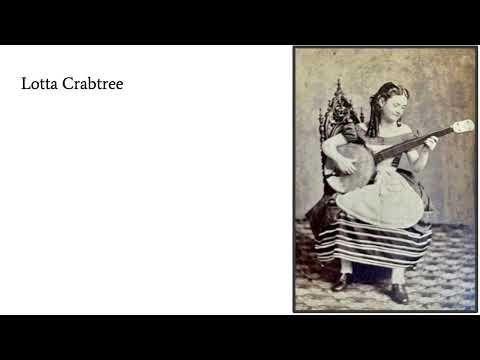
Gaddy described multiple strands of evidence: photographs from private collections, college yearbooks and newspaper accounts that document women's banjo clubs at institutions such as Smith College, and named performers who built public careers. She cited Lottie Crabtree as an early widely known female banjoist who helped normalize women publicly playing the instrument and profiled Alice Keller Fox, a prolific arranger and teacher described in contemporary press notices as “the foremost lady banjoist of the world.”
On archival uncertainty and identification, Gaddy emphasized the research challenges: she noted inconsistent newspaper notices around mandolin player Seth Weeks’s family and said many historic images lack captions, leaving the provenance and identities of musicians unresolved.
Gaddy also discussed early recording history. She said Shirley Spalding was the first woman documented to record on the banjo for Edison, and she connected later recordings (for example, Samantha Bumgarner’s 1924 hillbilly records) to a broader industry practice that separated artists by perceived genre and often by race. “There was also a division among race where you could have a black banjo player playing essentially the same thing as a white banjo player, but the black banjo player would get put on what they called race records and the white banjo player would get put on hillbilly records,” Gaddy said.
To illustrate stylistic variety, Gaddy played historical audio clips, contrasting highly technical, fingerpicked classical-style recordings with simpler clawhammer old-time dance styles. She also played an Elizabeth Cotton recording and described Cotton’s life and revival through the Seeger family’s encouragement, using it to show continuities of African-American old-time traditions despite commercial racialization.
During audience questions, a member asked how women at colleges were able to participate in banjo clubs despite prevailing ideas of “ladylike” behavior. Gaddy said the clubs were simultaneously fun, social activities and — in some cases — quietly subversive, citing yearbook jokes and the social paths of several women who later pursued teaching or professional music roles.
The talk combined visual and audio sources from collectors and archives and repeatedly stressed how gaps in captions and inconsistent reporting complicate the historical record. The program concluded with a question-and-answer period and closing remarks thanking attendees.
What’s next: Gaddy and others emphasized continuing archival detective work to identify unnamed musicians in photographs and to reconcile conflicting newspaper notices; the exhibit related to the talk closes Sunday at the East Tennessee History Center.