Get Full Government Meeting Transcripts, Videos, & Alerts Forever!
Get email alerts on the Local Finance topic
No spam. Unsubscribe anytime.
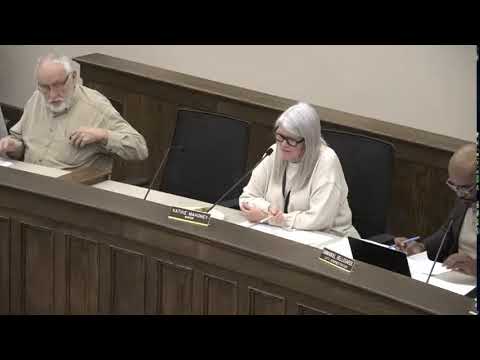
Keokuk council debates assuming KEDC loan for Depot project amid paperwork, revenue questions
Summary
Council members spent extensive time reviewing a proposal for the city to assume a $281,200 loan tied to the Southeast Iowa Developmental Center project, raising questions about inconsistent bank paperwork, reliance on rent and TIF funds, and the absence of a clear payoff plan.
City staff told the Keokuk City Council on Jan. 2 that the city could assume a loan currently held by the Keokuk Economic Development Corporation (KEDC) for the Southeast Iowa Developmental Center project, but council members paused action after detailed questions about the loan documents and repayment strategy.
City staff said the loan’s current principal balance is "$281,200" and that, if the council assumed the loan, the city "would then receive 100% — $120,000 per year — of the rent money," funds staff said could be applied to debt service. Staff also told the council that previously the KEDC had received 50% of rent revenue and passed the remainder to the city for operating costs.
Why it matters: Assuming the loan would transfer both the debt obligation and control over rent revenues to the city. Council members pressed for clarity because the paperwork in the council packets contained inconsistent figures and terms — including line‑of‑credit forms showing a $350,000 cap and other documents described in the packet as a seven‑year loan — and because the city currently subsidizes maintenance costs on the building from TIF funds.
Council concerns and questions
Several council members said the bank paperwork did not agree across documents. One member noted a substantive difference between a seven‑year term and a shorter maturity date reflected in the copies the council had received and asked for corrected bank documentation before a final decision. Council members also said the building’s operating expenses and maintenance needs had created a gap between income and costs (a council member characterized that gap as "about $30,000" in recent discussion), and they sought a clear repayment strategy beyond assuming rent revenue.
City staff and other speakers explained there had been a line‑of‑credit set at $350,000 while the final construction cost came in lower (roughly $298,000 by staff’s account), which accounts for the cap shown on some documents. Staff also said that when KEDC’s direct management diminishes, the city would be responsible for oversight and could capture the full rent stream for debt service or other uses.
Outcome and next steps
Council members moved to delay final action until corrected loan documents and clearer financial projections were provided. The transcript shows a motion to table while staff and a council member sought to obtain and present bank confirmations that show whether the line of credit had been converted to a traditional loan and the correct principal and maturity dates. The council did not adopt a final resolution on the loan assumption at the Jan. 2 meeting; members requested the accurate bank documents and further financial detail before a vote.
Fiscal and governance context
Council discussion referenced use of TIF funds for building maintenance and the city’s prior role as a cosigner on the loan. Several members urged caution because loan covenants and terms could change if participating banks change hands. Some council members recommended waiting up to a year to revisit assuming the loan to track KEDC’s remaining activity and see whether additional tenants are secured, while others expressed preference for a hands‑on city approach if documentation supports it.
The council also discussed contingency and tenant risk: staff cautioned that payoff timing depends on whether existing tenants remain and whether new tenants are secured; council members noted there is no guarantee tenants remain over the loan term. The council asked staff to obtain corrected bank paperwork and, if necessary, invite a bank representative to clarify the records before taking any formal action.