Get Full Government Meeting Transcripts, Videos, & Alerts Forever!
Get email alerts on the Public Comment Rules topic
No spam. Unsubscribe anytime.
Committee asks solicitor to draft rule requiring name and ward or address for public comment
Summary
The Holyoke City Charter & Rules Committee voted to ask the city solicitor to draft a rule requiring anyone participating in public comment — in‑person or remotely — to provide their name and either a street address or ward; the solicitor warned video or content bans could raise First Amendment risks.
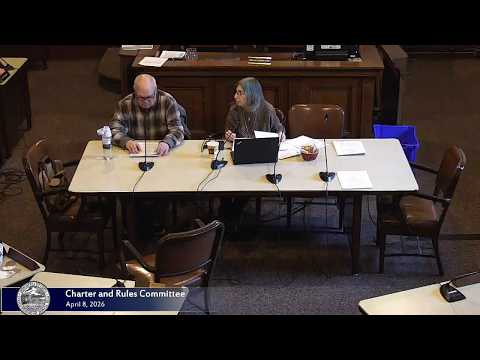
The Holyoke City Charter and Rules Committee voted to ask the city solicitor to draft a rule that would require public‑comment speakers, whether in the chamber or on Zoom, to provide their name and either a street address or the ward where they live.
The motion, made during a lengthy committee discussion of public‑comment practices, was intended to formalize what several members said has long been the council’s informal practice. “We ask anybody speaking at public comment, regardless of which way they are participating, that they provide their name and address,” said Councilor Linda Vacon during the debate, urging the committee to preserve access while clarifying identification requirements.
Councilor Mike Sullivan argued that remote participants who hide their faces or display political placards create opportunities for fraud and undermine fairness to in‑person speakers. “When people refuse to show themselves … it’s not fair to the people that take the time to come here,” Sullivan said, arguing that visible identification helps the committee assess credibility and follow up on comments.
Other members pushed back, saying remote access is an important accommodation. One member noted technical staff can remove disruptive participants: “Jeffrey has the ability to shut him down,” a committee member said, describing existing moderation tools. Several members recommended allowing ward as an alternative to a full street address to ease accessibility concerns for callers with limited technology.
City Solicitor Besonette told the committee he would draft proposed language. Besonette recommended permitting either a ward or a street address as sufficient identification and cautioned that any rule requiring cameras open or broadly policing signs on Zoom could raise First Amendment and legal risks. “You can make people unblock their video … but when you get into the freedom of speech angle, it becomes problematic,” he said.
The committee approved the motion to have the solicitor prepare draft language and return it to the committee for final review. The chair said the draft will be brought back so the committee can consider precise wording, including a formal carve‑out for the president’s discretion to waive identification requirements in special circumstances.
The committee’s action was procedural: it asked staff to prepare formal rule text for later consideration rather than adopting an immediate substantive ban or mandate. The committee also considered, and ultimately recommended against, a related order that would have given any councilor named during public comment two minutes to respond; members said such a response rule risked expanding council time spent in back‑and‑forth exchanges with members of the public.
Next steps: the city solicitor will draft the proposed rule and return it to the Charter & Rules Committee for review and a possible recommendation to the full council.