Get Full Government Meeting Transcripts, Videos, & Alerts Forever!
Get email alerts on the Constitutional Amendment Pardons topic
No spam. Unsubscribe anytime.
Kentucky committee advances constitutional amendment to limit governors' pardons near elections
Summary
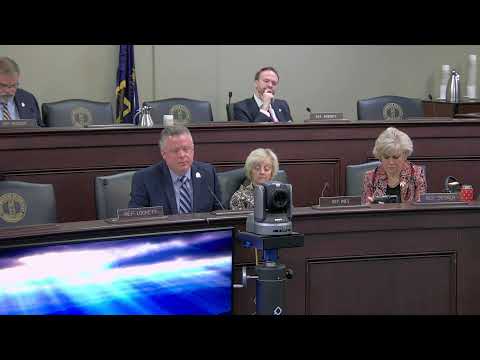
The Governmental Affairs Committee voted 15-0 to advance Senate Bill 10, a constitutional amendment proposed by Sen. Chris McDaniel that would bar governors from issuing pardons or commutations during the 60 days before an election and between an election and swearing-in, proponents said.
The Kentucky House Governmental Affairs Committee on Tuesday voted unanimously to give a favorable poll to Senate Bill 10, a proposed constitutional amendment that would suspend a governor's power to grant pardons and commutations during narrow pre- and post-election windows, the bill's sponsor said.
Sen. Chris McDaniel (R., 23rd District), who introduced the measure to the committee, framed the amendment as a response to controversial pardons issued in 2019 by former Gov. Matt Bevin. McDaniel said the amendment would not eliminate the pardon power but would bar its exercise during the 60 days immediately before an election and in the period between an election and the successor's swearing-in — a restriction he described as ensuring voters have notice and political accountability for late-term clemency decisions. "There will be no more hiding in the darkness of the last minute of an administration," McDaniel said.
McDaniel recounted several specific pardons and commutations from late 2019 and argued the governor's unilateral power to pardon can override decisions by police, prosecutors, juries and judges. He told the committee the change reflects a desire for transparency: "Whatever actions are taken ... the voters have notice," he said.
Committee members asked whether the amendment should instead restrict pardons by offense type rather than by timing. Representative Callaway asked whether certain crimes might be carved out; McDaniel said he had considered crime-based limits but chose a simple, time-based approach so the electorate would be informed when pardons occur.
Members also pressed on whether the amendment would cover commutations or expungements. McDaniel and committee members agreed the language covers pardons and commutations; McDaniel said he did not believe expungements would be included.
Representative Roberts raised concerns about wrongful convictions and asked whether the amendment would foreclose a necessary pathway for innocent people to secure relief. She cited Herrera v. Collins, a U.S. Supreme Court case, as an example of the risks of denying later review. McDaniel said existing safeguards in the justice system — appeals processes and executive discretion earlier in a term — would remain and invited further drafting work on any additional safeguards.
Representative Lockett asked how the change would appear on the ballot; McDaniel said the committee expects a concise ballot question and that any changes to which crimes are covered would require a separate constitutional amendment rather than ordinary legislation.
McDaniel told the committee the idea grew from constituent calls after the 2019 pardons and that he had not used outside lobbyists or paid media in developing the amendment. He cited support from groups including the Fraternal Order of Police, prosecutors and sheriffs.
The secretary called the roll on the favorable poll. Fifteen members voted yes, none voted no; the committee recorded a favorable poll and will send the measure to the House floor. The committee adjourned without further action.
What happens next: With the committee's favorable poll, SB 10 moves to the full House for consideration and, if approved there, would be placed before voters as a constitutional amendment per the sponsor's description.