Get Full Government Meeting Transcripts, Videos, & Alerts Forever!
Get email alerts on the Public Health Emergency Preparedness topic
No spam. Unsubscribe anytime.
Oregon Health Authority review urges Josephine County to refill federally funded emergency-preparedness coordinator
Summary
OHA presented a triennial review finding strengths in immunizations and vital records but flagged public-health emergency preparedness: the county’s coordinator position has been vacant for over a year despite roughly $82,000 in annual federal funding, and OHA urged the county to reestablish the position before fire season.
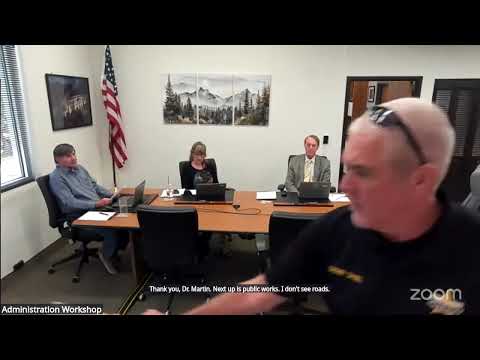
Liz Hunt, local and tribal public health manager for the Oregon Health Authority, told the Josephine County Board of Commissioners at its May 12 administrative workshop that OHA’s 2022–2025 triennial review found many strengths in the county’s public-health programs but also several areas needing attention.
Hunt said the review praised county partnerships, immunization outreach and vital records operations, and noted that tuberculosis care was handled well despite nine cases over the three-year review period. But she told the board that public-health emergency preparedness (PHEP) had ten findings and that the PHEP coordinator position has been vacant “for over a year,” slowing compliance work and preparedness ahead of fire season. “The funding for that position is funded. It’s $82,000 each fiscal year,” Hunt said, adding that OHA can release those funds as soon as the county is ready to hire.
The presentation explained the county’s two intergovernmental agreements with the state — the public-health IGA (which passes federal funds to the county) and the environmental-health IGA (under which certain remittances go back to the state) — and reviewed statutory responsibilities for a local public health authority and its governing body. Hunt and other OHA staff said some fiscal and environmental-health findings are already being addressed and praised staff for raising the sanitary-survey completion rate from about 27% to 42% since the review.
Commissioners asked whether the PHEP coordinator must sit in public health or could be placed in emergency management. Hunt said either arrangement can work operationally, but the position’s accountability and day-to-day effectiveness depends on sufficient staffing and clear authority; OHA staff noted that, in their view, having the coordinator in public health is a good fit but emphasized close collaboration with emergency management. Commissioners also asked about the stability of federal and state funding; OHA said modernization funds are state funds on a biennial schedule, PHEP funds are federal, and OHA was not tracking an imminent loss of grant awards.
Hunt encouraged the county to hire promptly to restore compliance and preparedness capacities and offered OHA assistance in releasing the funded position and helping the county get back into compliance before the next fire season. The review and detailed program findings were provided to the board as part of the county packet.