Get Full Government Meeting Transcripts, Videos, & Alerts Forever!
Get email alerts on the Comprehensive Planning topic
No spam. Unsubscribe anytime.
Consultants present Naples 2045 draft; board focuses on resilience, tree protection and character
Summary
Consultants reviewed a working draft of the Naples 2045 comprehensive‑plan update, introducing a standalone Resiliency element, new actions for tree protection and recommendations to reinforce community character; the PAB provided detailed feedback and requested clearer implementation timing and greater public engagement.
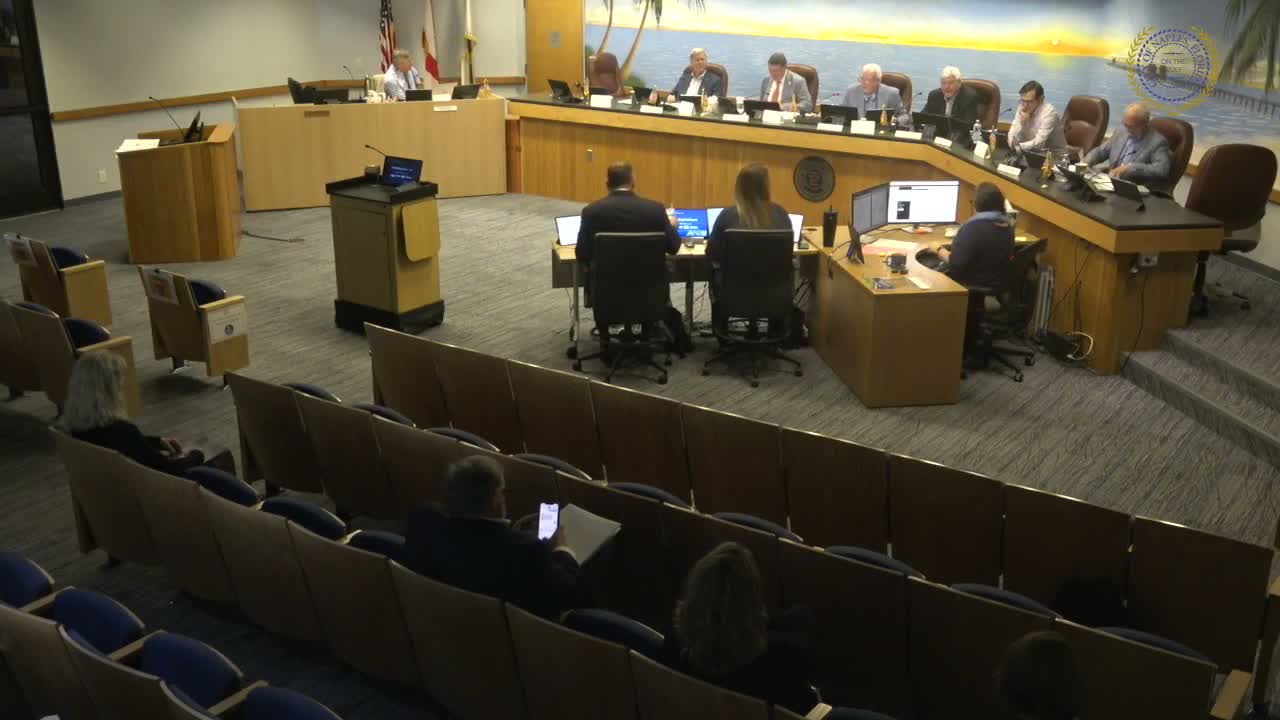
Consultant teams leading the Naples 2045 update presented a working draft to the Planning Advisory Board on March 11, highlighting a new Resiliency element, reorganized future land‑use pages, and actions to protect trees and preserve community character. The board and members of the public offered detailed feedback on implementation, monitoring and coordination with Collier County.
Laura DeJohn (Johnson Engineering) said the draft preserves most existing plan format but adds a Resiliency element and introduces an explicit “actions” section to make the plan more actionable. She described a schedule that includes an April 13 city‑council workshop and a May 13 PAB meeting to consider transmission to council for state review.
Erin Dady, the resilience expert, explained the Resiliency element’s four objectives: maintain and use data from the city’s 2023 vulnerability assessment and 2024 adaptation plan; strengthen coordination among public‑works, natural‑resources and stormwater programs; plan neighborhood‑level adaptation and outreach; and identify at‑risk locations and nature‑based solutions. Dady urged integrating tidal flooding into the city’s stormwater level‑of‑service standards and noted coordination with FEMA Community Rating System work.
Public commenters urged stronger, enforceable language and measurable provisions. Susan Brown of the Old Naples Association asked the board to prioritize residents’ welfare, stronger language (use “shall”), historic‑neighborhood protection and clear monitoring. Carrie Schumann of the Conservancy of Southwest Florida welcomed the resilience focus and urged more nonprofit engagement and nature‑based adaptation, citing studies that show mangroves significantly reduce local flood risk. Jenna Heiderman, representing a coalition of HOAs, asked for more transparent timelines and attention to the implications of pending state legislation (SB 180) on local planning authority.
The consultant team proposed reorganizing future land‑use categories so each category includes a clear description, intent, applicable zoning, primary/secondary uses and building‑block guidance (height, lot coverage, open space). New Objective 6 aims to “protect community character” by updating the Design Review Board handbook and revising Land Development Code (LDC) standards for commercial, multifamily and single‑family projects to address building massing, required open/green space and tree protection. The draft also contains actions to inventory historic resources and consider recognition programs.
Board members focused on implementation: several asked the team to add timelines or an implementation strategy (an administrative CIP‑style schedule) so the city can track when actions will be completed and how they will be resourced. Members asked for clearer, measurable targets in water‑quality monitoring, stronger language on tree and shade‑tree programs, and more ambitious treatment of alternative transportation (park‑and‑ride, shuttles and pedestrian/cycle connectivity).
Consultants recommended that the implementation details and technical design criteria (for example, a definition of any tailwater condition used in stormwater design) be developed as code language, manuals or administrative documents so they can be updated without a comp‑plan amendment. The team promised to refine policy specificity and timelines with staff and return an updated draft to PAB and council according to the stated schedule.
Next procedural steps: the team will present an updated working draft at a city‑council workshop on April 13, return to PAB on May 13 with a clean draft for consideration to transmit to council, and then submit to the state Department of Commerce for formal review. Public materials and comment options are posted at www.naples2045.com.
Quotes in context: public‑comment speakers repeatedly urged prescriptive language and monitoring: “The plan must reinforce a residents‑first ethic,” said Susan Brown. “Mangroves deliver measurable flood‑risk reduction and should figure into our adaptation choices,” said Carrie Schumann. The consultants agreed to return with more specific implementation language and code recommendations for Board review.
The board asked staff and consultants to provide a clearer implementation schedule and a public‑facing monitoring dashboard so the community can track progress against plan actions.