Get Full Government Meeting Transcripts, Videos, & Alerts Forever!
Get email alerts on the Noise Monitoring topic
No spam. Unsubscribe anytime.
Board moves to pursue permanent noise monitors and integrated flight tracking after consultant presentation
Summary
A consultant proposed installing permanent noise‑monitoring terminals that pair noise measurements with flight tracks and optional ADS‑B receivers. Commissioners signaled support for a staff proposal to pursue a phased deployment (staff to return with a specific proposal), and discussed data use, costs and community siting.
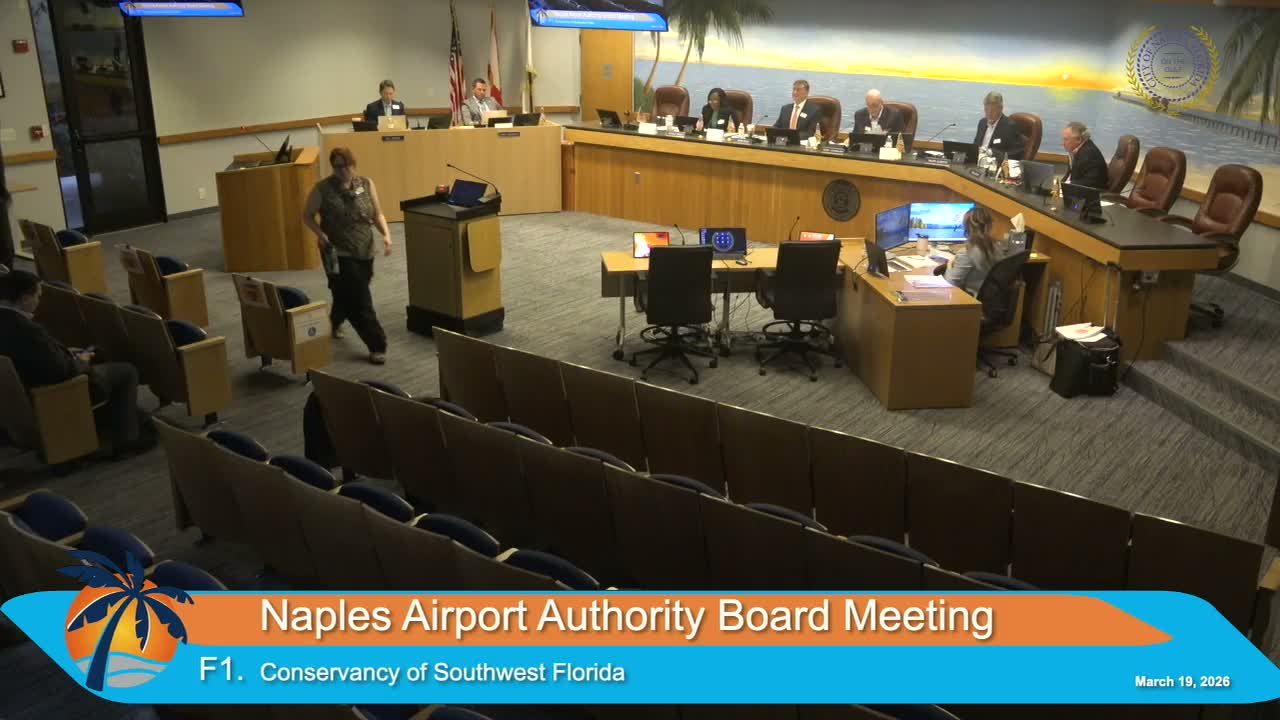
A consultant from Ideagen/Envirosuite outlined a plan to incorporate permanent noise‑monitoring terminals around Naples that would feed real‑time noise and flight‑track data to a public dashboard and to airport staff. Greg Brocchi said the terminals combine high‑quality microphones, weather stations and cellular telemetry; they can operate on AC or solar power and may be fitted with ADS‑B receivers to improve aircraft identification where available.
Brocchi explained the system’s analytics: noise time‑series are paired with flight tracks and proprietary algorithms correlate measured events to specific aircraft types and operations. He said that permanent monitors give a consistent baseline year‑over‑year and can reduce staff time compared with repeated portable deployments, while portable monitors remain available to investigate homeowner complaints.
Commissioners asked technical and policy questions: ADS‑B coverage varies by aircraft equipment and legislation (a pending congressional bill could restrict ADS‑B availability), siting requires landowner permission and possibly power access, and costs include one‑time installation plus annual calibration and monitoring fees. Brocchi estimated ADS‑B add‑ons could be a marginal 5–10% uplift and said a phased rollout of 3–12 monitors is common; the Noise Compatibility Committee had discussed 12 units and staff noted a phased approach was acceptable.
The board directed staff to bring back a site‑specific proposal and pricing, and several commissioners expressed a preference for pursuing ADS‑B capability if possible. "Having the data to back up those conversations is very, very valuable," one commissioner said, noting that measured evidence can reduce complaints and focus mitigation efforts (Greg Brocchi, Ideagen/Envirosuite).