Get Full Government Meeting Transcripts, Videos, & Alerts Forever!
Get email alerts on the Affordable Housing topic
No spam. Unsubscribe anytime.
Committee report: affordable housing fund has leveraged about $474 million and priorities include supportive housing
Summary
Council member Reynolds reported the Social Services and Public Safety Committee’s April 14 update: since 2015 roughly $59 million in local investments leveraged about $474 million externally to support more than 3,800 housing units; FY27 priorities include expanding supportive housing and units for households below 30% AMI; the committee also reviewed a mobile market and a domestic violence coalition update.
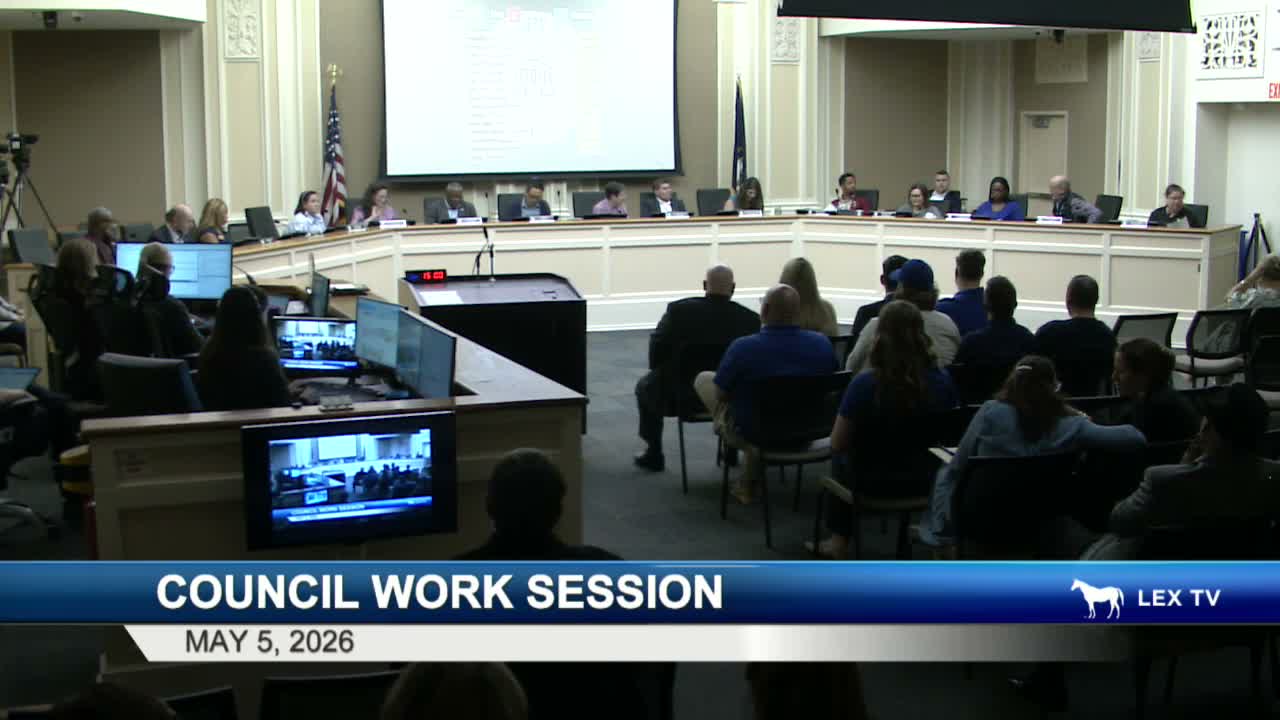
Council member Reynolds reported May 5 on the Social Services and Public Safety Committee’s April 14 meeting, summarizing investments and priorities for local housing and social programs.
Reynolds said that since 2015 the city’s affordable housing fund has committed about $59,000,000 in local investments, which have leveraged roughly $474,000,000 in external funding to support more than 3,800 housing units. Looking to fiscal 2027, Reynolds identified priorities including expanded permanent supportive housing, creating more units targeted to households below 30% area median income, and advancing targeted developments while acknowledging the fund’s constrained capacity.
The committee also received an update on a Lexington mobile market operating through a public–private partnership that delivers affordable groceries to underserved neighborhoods; next steps named in the report include strengthening data collection, identifying service gaps and evaluating expansion capacity. Reynolds said the committee received an update on the Domestic Violence Prevention Coalition, noting future priorities of improving outcome measurements, expanding housing and supportive services for survivors, and strengthening partnerships.
Reynolds concluded the report to the full council and invited questions; none were recorded in the work session transcript. The report provides a snapshot of committee priorities but does not, in this session, include new funding approvals or formal vote outcomes.