Get Full Government Meeting Transcripts, Videos, & Alerts Forever!
Get email alerts on the Water Resources topic
No spam. Unsubscribe anytime.
Friends of the Verde River presents 2025 watershed report card; city urged to support monitoring and restoration
Summary
Friends of the Verde River presented a 2025 watershed report card to Sedona council, describing a C+ overall grade, improvements in recreation and riparian bird habitat, increased sampling that changed water‑quality certainty, and concerns about sedimentation and water quantity above Clarkdale.
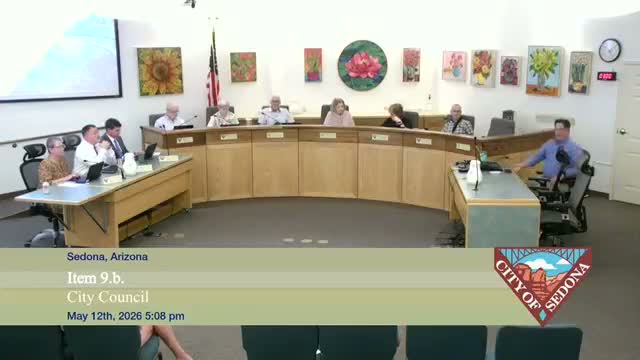
David Gresley, executive director of Friends of the Verde River, presented the group’s 2025 watershed report card to the Sedona City Council on May 12, saying it is the organization’s second iteration since 2020 and that it received financial support from the city.
Gresley said the watershed report card covers seven regions across the Verde Basin and reported an overall grade of “C+.” He highlighted gains in recreation access and riparian bird habitat, credited removal of invasive species (more than 12,000 acres cleared over 15 years) and urged stronger upland restoration to reduce sedimentation. “You can see right there in the middle it’s a C plus,” Gresley said while showing the report card slide.
Gresley explained that water‑quality scores appeared to worsen compared with the prior report not because conditions declined but because the partnership increased sampling locations from roughly 15 to more than 60, improving certainty and revealing problems previously unmeasured. He said water quantity is a concern above Clarkdale, where some tributaries are at risk of becoming intermittent, and noted broader groundwater issues that could affect the watershed.
Councilors asked for additional detail about public access and the newly acquired 33 acres from Verde Village that Friends of the Verde River intends to develop as a reserve and education center. Gresley said the organization is moving into a leased headquarters and plans trails, interpretive signs, naturalist programs and public access while continuing community science programs such as beaver and otter spotters.
Gresley flagged two priorities for follow‑up: increasing macroinvertebrate monitoring to inform biological water‑quality indicators, and securing a sustainable funding stream for ongoing water monitoring. He said volunteer contributions remain important but expressed concern about the long‑term cost of maintaining and expanding monitoring work.
The presentation closed with Gresley inviting council questions and offering to work with the city on partnerships and monitoring needs.