Get Full Government Meeting Transcripts, Videos, & Alerts Forever!
Get email alerts on the Workforce Housing topic
No spam. Unsubscribe anytime.
Council wrestles with definition and role of 'workforce housing' as part of strategic priorities
Summary
Council members agreed workforce housing is a priority but diverged on whom to serve and the town’s role; staff cautioned the town can move the market only so far and recommended council define the target market before asking staff for tactics.
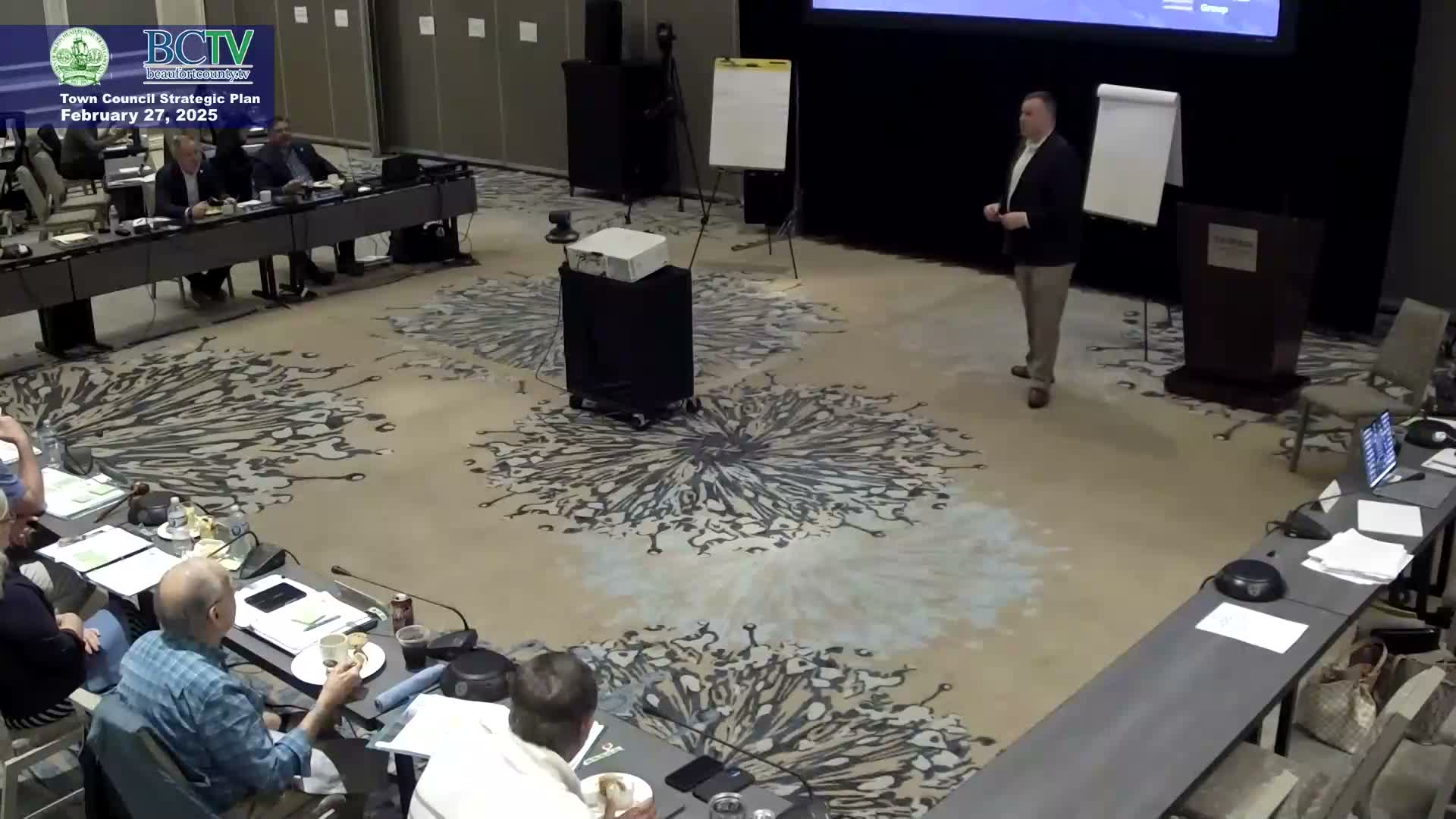
Council members spent a sustained portion of the workshop probing what “workforce housing” should mean for Hilton Head Island and what role the town should play.
Consultant Matt Horne framed the issue with market math: using the council’s quick estimates, local median household income (roughly six figures) and average weekly wage (roughly $43,000 annually) create widely different affordability windows. Horne said that, based on developer input, “you don't” generally get to a $130,000 home on the island through conventional building techniques and underwriting without targeted subsidy or programmatic intervention.
Several council members urged the council to pick a clear market segment to serve. One said that if members can agree “what workforce is,” the council could turn what is now a divisive topic into an implementable program that garners broader support. Others cautioned that policy choices must preserve quality of life and should avoid creating substandard housing solutions.
Town Manager Mark Orlando said the town can affect the local housing market to a degree (by enabling zoning changes, leveraging land assets and exploring motel conversions or land‑use tactics), but that larger market forces — short‑term rental growth and regional job expansion — constrain what the town alone can accomplish.
Public commenters and some council members also flagged short‑term rental conversion as a central driver of housing shortage, pointing to a rise in units from roughly 3,000 to 7,000 and arguing that the proliferation of short‑term rentals reduces long‑term occupancy options.
Next steps: Council asked staff to return with policy options that clarify target sub‑markets, possible tactics (e.g., zoning changes, motel conversion pilots, prioritized CIP support), and realistic timelines and funding pathways so the council can decide whether to endorse focused programs.