Get Full Government Meeting Transcripts, Videos, & Alerts Forever!
Get email alerts on the County Budget topic
No spam. Unsubscribe anytime.
Knox County finance leaders preview FY27 budget as schools, roads and solid-waste costs draw scrutiny
Summary
County and school finance officials told the finance committee on May 11 that district fund balances remain healthy but state funding (TISA) is increasingly hard to predict; county staff previewed a FY27 budget that shifts one tax penny from schools to the general fund, funds teacher-pay increases, and uses transfers and fund balance to cover higher solid-waste and paving costs.
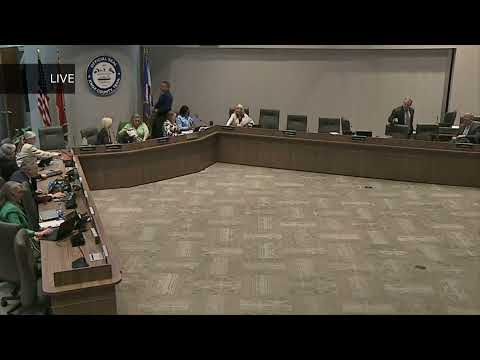
Knox County officials gave commissioners a detailed fiscal picture on May 11, saying revenues are generally healthy but several structural pressures could tighten budgets in coming years.
Ron McPherson, finance director for Knox County Schools, told the finance committee the district's "financial condition continues to remain stable" and that fund-balance levels are "healthy." He warned that state funding under the TISA formula has become harder to predict and said the district is closely monitoring enrollment and fiscal-capacity measures that affect future state allocations. "The longer we're growing into that model, the more difficult it's becoming to predict what those dollars will be from year to year," McPherson said.
At the county level, Finance Director Chris Caldwell reviewed metrics his office received from the state comptroller and a draft FY27 budget that the mayor has proposed. He said the county's cash-on-hand equals roughly 134 days of expenditures, or about 37% of annual operating spending, a figure above the state target. Caldwell also reported a projected uptick in sales-tax and property-tax revenue and a projected FY27 current property-tax total of about $307.8 million.
Caldwell described three budget drivers commissioners pressed him to explain: teacher-pay increases; solid-waste contract costs; and road maintenance. On teacher pay, Caldwell said the mayor's proposal allocates money to raise starting teacher pay to $50,000. "To get to $50k'and plus the step increases" would cost the county on the order of "12 to 13 [million dollars]," he said, explaining the step raises (annual increments) add materially to the base pay increase.
Solid-waste hauling costs rose sharply this year after the county's hauling contract came in much higher than expected. Caldwell said the FY27 budget balances that fund using a mix of transfers and fund balance while staff and consultants work on longer-term service models. Public-works director Jim Snowden told commissioners the hauling bid doubled and that the county will present options in coming months. Snowden also outlined a paving program that expects about 45 miles of resurfacing this year (including state-aid roads) and likely about 40 miles next year. He said material costs such as asphalt have risen substantially: "TDOT publishes that we also adhere to an asphalt c min index'it was $600 a ton last May, now it's like $725 a ton." Snowden estimated capital to double current resurfacing to roughly $14'to $15 million annually.
Commissioners focused extensive questioning on maintenance-of-effort rules and the interaction between local choices and state enforcement. County counsel and finance staff explained maintenance of effort is calculated using local recurring revenue and that the state can withhold sales-tax distributions to enforce compliance with certain mandates such as pension or teacher-pay requirements. "They reserve the right to... hold it until you remedy what's wrong," Caldwell said.
Caldwell outlined the remainder of the FY27 process: a first public hearing scheduled between June 1 and June 12, and a second public hearing followed by the county commission vote on June 15. He also flagged reappraisal notices going out to property owners and a July board of equalization for protests; reassessments will be used to set the certified tax rate in August.
Where this leaves commissioners is a string of policy choices: how much local revenue to dedicate to school compensation versus capital needs such as road resurfacing; how to cover rising operating costs; and whether to adjust service models where contract prices outpace budget projections. Caldwell and McPherson told the committee they will provide more precise cost breakdowns on request and remain available for individual briefings.
The committee set the calendar for budget hearings and closed its session without a vote on the budget itself; the full commission is expected to consider a final budget in mid-June.