Get Full Government Meeting Transcripts, Videos, & Alerts Forever!
Get email alerts on the Civil Asset Forfeiture Counsel topic
No spam. Unsubscribe anytime.
Senate appropriations committee advances House Bill 1250 to guarantee counsel in forfeiture cases
Summary
The Senate Appropriations Committee heard mixed testimony on House Bill 1250—supporters said it restores due process by funding counsel in civil forfeiture cases, while state agencies warned it would drain a law-enforcement grant fund; the committee voted to pass the bill unanimously and put it on the consent calendar.
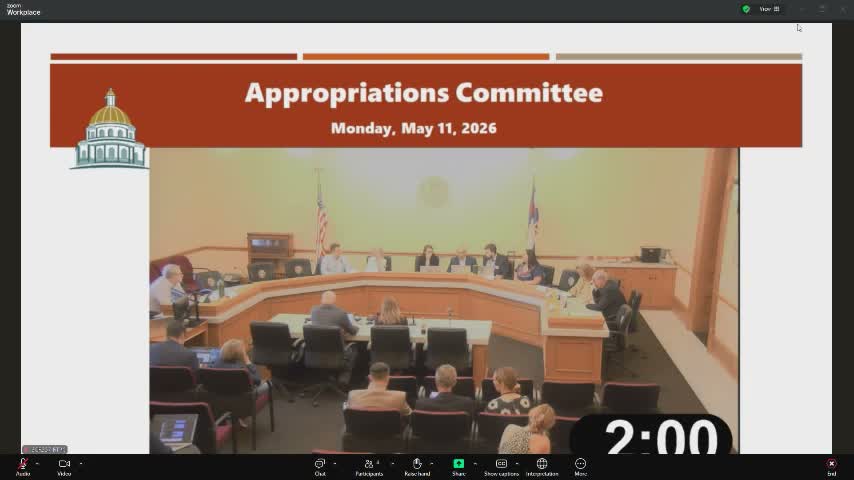
The Senate Appropriations Committee on Wednesday voted to adopt House Bill 1250 after hearing testimony from civil-rights groups, law-enforcement representatives and state officials about funding and fairness in civil asset forfeiture.
Ani Robinson, public policy director at the ACLU of Colorado, testified in favor of the bill, saying the measure addresses “a fundamental imbalance” in which the government can seize property before any criminal conviction and many people lack meaningful access to legal representation. “This bill makes a critical and long overdue correction by establishing access to forfeiture defense counsel and creating a fund to ensure representation is actually accessible, not just theoretical,” Robinson said.
State officials and some law-enforcement voices opposed or cautioned about the bill’s fiscal effects. Bruce Eisenhower, legislative liaison for the Department of Local Affairs, said the measure would draw down the balance of the Law Enforcement Community Services (LECS) grant program, leaving local grant recipients without those funds. Eisenhower told the committee DOLA receives “approximately $240,000 on average each year from civil assets” for that program and warned the new fund structure would exhaust the grant balance.
Captain Brandon Nathlich, legislative liaison for the Colorado State Patrol, said he shared DOLA’s concerns and that the proceeds currently support local public-safety projects. “Taking these resources away from our locals is not in our best interest in public safety,” Nathlich said.
Representatives of organizations supporting the bill said reforms can protect property owners without hamstringing legitimate law enforcement. Todd Reeves, testifying for the Colorado Association of Chiefs of Police, said the reforms raise the bar for how agencies use forfeiture and can build public trust even if they create new operational constraints. A Rocky Mountain Gun Owners representative argued that seized property often goes to agency-controlled funds and said the average cost to hire counsel to recover seized property is about $3,500, which can exceed the value of typical seizures.
Committee members pressed for historical data on the size of forfeiture receipts. John Armstrong, legislative council staff, told Senator Gonzales that the values reported on DOLA’s website aggregate federal, state and local forfeitures and vary widely year to year, citing report figures that ranged from about $12 million in one year to as much as $228 million in another.
After concluding questions and confirming no amendments, the committee called the question on adoption. The chair announced the bill passed unanimously and would be placed on the consent calendar. No further action was taken at the hearing; the bill’s next procedural step is consideration by the Committee of the Whole.