Get Full Government Meeting Transcripts, Videos, & Alerts Forever!
Get email alerts on the Budget topic
No spam. Unsubscribe anytime.
St. Pete Beach approves FY2026 budget amendment on first reading to cover stormwater, wastewater and capital needs
Summary
The City Commission unanimously approved Ordinance 2026-12 on first reading May 12, amending the FY2026 budget to increase appropriations across multiple funds for stormwater and wastewater projects, building and permitting services, fleet and capital repairs, and software replacement; staff said most items are reallocations with three reserve requests.
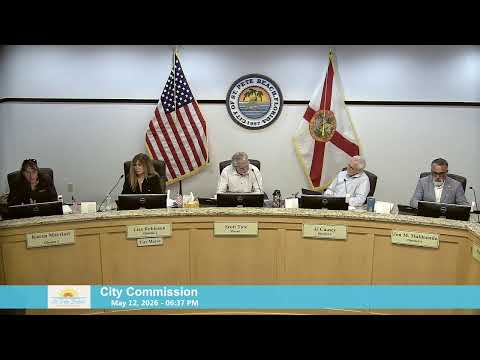
The St. Pete Beach City Commission unanimously approved Ordinance 2026-12 on first reading at its May 12 meeting, adopting a midyear amendment to the FY2026 budget that increases appropriations across the general, building, wastewater/reclaimed water, stormwater and construction project funds.
City finance staff presented a line-by-line overview of requests, saying the changes respond primarily to storm-recovery needs and bids that exceeded engineering estimates. The presentation listed dozens of items including insurance-funded equipment replacements for public safety and recreation, a requested $800,000 reappropriation for contractual and professional services in the building fund, a proposed $300,000 allocation to replace building and permitting software, and several capital and fleet items.
Why it matters: The amendment funds projects tied to resilience and public safety — seawall repair, stormwater inspections and wastewater work — and covers timing and reappropriation issues on previously authorized purchases.
Staff detailed enterprise-fund needs that pushed the amendment. The wastewater cleaning and inspection contract’s total bid was $2.5 million, staff said, requiring an additional $500,000 beyond current purchase orders to complete the work. The stormwater system cleaning and inspection work bid $1.8 million against an $800,000 budget, creating an approximately $1 million shortfall staff asked the commission to cover. For an active construction PO identified by a commissioner, staff said the PO was for $2,000,000 and the full bid was $2,500,000, with the added funds requested to fund the remainder.
Kevin Mills, public services director, told commissioners that many line items are being balanced within existing general-ledger accounts and that only three requests would draw on reserves: the reappropriation of a crane truck purchase from fiscal 2023 that was not reappropriated into subsequent budgets, a wastewater 'true-up' tied to the city’s agreement with the City of St. Petersburg for treatment, and the reappropriation for three John Deere gators that were not replaced in 2025. "We're not actually asking for more money on a lot of these things," Mills said, "we're balancing it within the account."
The presenter summarized funding sources for the amendment: "we'd be looking at taking approximately 50% from the reserves across all of our funds," the presenter said, and described other balances coming from transfers, within-account adjustments and grant or insurance proceeds.
Commissioners pressed staff on why bids routinely exceed estimates and how to reduce surprises; staff said it will engage vendors earlier in the process to refine cost estimates and continue using midyear adjustments when necessary. The city manager also noted a charter constraint that prevents the city manager from transferring funds across some funds and departments without commission approval, meaning some reallocations must come before the commission.
The ordinance passed on a voice vote with recorded yes votes by Commissioner Causey, Commissioner Maldonado, Commissioner Marriott, Vice Mayor Robinson and Mayor Tate. The commission also approved the consent agenda earlier in the meeting by a unanimous voice vote.
What’s next: Staff said there will be upcoming commission budget workshops and public opportunities to review the amendment and ask questions; many projects still require contractor work and grant funding determinations before completion.