Get Full Government Meeting Transcripts, Videos, & Alerts Forever!
Get email alerts on the Health Care topic
No spam. Unsubscribe anytime.
Senate committee advances A‑4 amendment moving hospital‑stabilization and Medicaid implementation provisions into State & Local Government review
Summary
The committee adopted a delete‑everything A‑4 amendment to SF 37.33 that moves hospital‑stability reporting, expedited rulemaking for Medical Assistance work requirements, a disproportionality determination exemption, and a Hennepin Healthcare task force into this committee for review; members debated federal Medicaid cuts and one‑time stabilization funding.
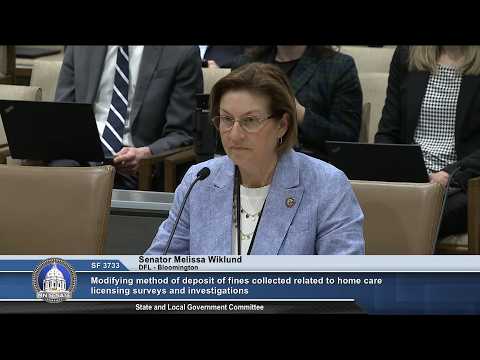
Senators on the Minnesota Senate State and Local Government Committee adopted a delete‑everything A‑4 amendment to Senate File 37.33 that transfers a set of health and budget provisions into this committee for additional review.
Sponsor Senator Clinton said the A‑4 amendment bundled items carried in the Health and Human Services budget bill that needed state‑government review, including an annual hospital financial‑stability report prepared for the February budget forecast, expedited rulemaking authority to implement federal Medical Assistance work‑engagement requirements, an exemption from rulemaking for a child‑welfare disproportionality determination, and a task force to review Hennepin Healthcare’s governance and structure.
The hospital‑stability provision would require the commissioners of management and budget and of health to develop a recurring report with financial metrics “to help us understand better the current status of hospitals in our state,” Clinton said. The sponsor also described a one‑time stabilization package in the budget bill that includes a $150 million grant for Hennepin County Health Care and roughly $133 million for other safety‑net hospitals and providers; the sponsor characterized the funding as the maximum the bill could include this year.
Senator Mike Lee raised sharply worded objections tied to recent federal legislation, calling implementation of the work‑requirement provisions a painful consequence of federal Medicaid cuts. “This is going to cause 150,000 to 250,000 Minnesotans to lose Medicaid,” he said, arguing that the loss of federal support would increase county expenses, raise property taxes and risk rural hospital closures.
Other senators echoed concerns about jobs and community impact; one member warned that as many as 26,000 health‑care workers could lose their jobs if hospitals close. Sponsors countered that the stabilization grants in the budget are a short‑term response and acknowledged the need for more sustainable long‑term solutions.
Committee members also questioned the composition of the Hennepin Healthcare task force, asking specifically whether emergency medical services (EMS) representation should be required. Clinton and other members said they had received requests for EMS participation and agreed to consider options while balancing task‑force size and practicality.
The committee adopted the A‑4 amendment by voice vote and laid SF 37.33, as amended, over for further consideration; no roll‑call tally is recorded in the transcript.
What’s next: SF 37.33 as amended will return for further action; sponsors indicated some provisions are tied to appropriations in the broader budget process and to federal implementation timelines (with a target of Jan. 1, 2027, for certain program changes).