Get Full Government Meeting Transcripts, Videos, & Alerts Forever!
Get email alerts on the Interconnection Process topic
No spam. Unsubscribe anytime.
BGE explains cluster studies, $1 million deposit and 10‑year TSA for large data‑center interconnections
Summary
BGE told Baltimore County staff that large data‑center projects (typically above ~50 MW) enter a multi‑phase interconnection process that can require a $1 million Phase‑1 deposit, a Transmission Security Agreement securing 10 years of transmission revenue via letter of credit, and federal review before projects proceed.
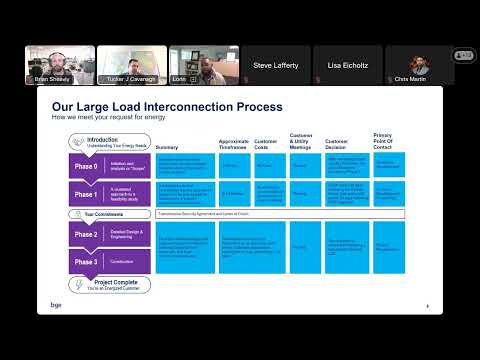
Lauren Hinton, manager of economic development at BGE, told Baltimore County staff that the utility’s large‑load interconnection process is designed to filter speculative proposals and ensure reliable grid planning. She said BGE’s phasing starts with a Phase 0 screening, then moves to a Phase 1 cluster study that typically requires about a $1 million deposit and takes roughly 9–12 months.
Hinton outlined the expectations for applicants: site control, a clear load‑ramp plan, preliminary site drawings and the capital and permitting to follow through. “Cluster studies happen twice a year,” she said, adding that customers who enter Phase 1 receive the cluster results and must decide whether to proceed. According to the presentation, BGE provides the electrical analysis to property owners and expects customers to secure supply from third‑party generators or commodity suppliers when appropriate.
On financial commitments, Hinton said a Transmission Security Agreement (TSA) follows the Phase 1 cluster study and must be signed within 30 days of the study results or the project will not proceed; customers are expected to secure a line of credit or similar collateral that covers anticipated transmission revenue over a ten‑year load ramp. The presentation described the TSA as designed to protect existing ratepayers and the integrity of the study process by deterring speculative load. BGE also said it submits TSAs for federal review, which the presentation estimated at about 60 days.
County staff asked whether a completed cluster study or TSA could transfer to a subsequent property owner. Brady Locker, an environmental staff member with Baltimore County, was told a new owner can step into the process but must accept the originally submitted load and sign the TSA; the utility said site‑specific environmental issues (for example wetlands or final siting) are the responsibility of the owner and local permitting processes.
BGE staff also said projects may require on‑site substations and that whether a BGE‑owned substation is needed depends on voltage class, load size and proximity to existing transmission. Presenters declined to discuss specific projects that are under nondisclosure agreements. The company reiterated that the cluster study evaluates impacts both upstream and downstream on the regional PJM grid so some violations and mitigation needs may fall outside BGE’s immediate territory.
The presentation concluded with an invitation for follow‑up meetings and a note that the utility can return for deeper technical briefings if the county requests more detail.
The discussion closed with next steps: the county will review BGE’s materials and may invite BGE back for further technical sessions or follow‑up Q&A.