Get Full Government Meeting Transcripts, Videos, & Alerts Forever!
Get email alerts on the Homestay Ordinance topic
No spam. Unsubscribe anytime.
Staff recommends keeping Charlottesvilles homestay rules but steps up monitoring and enforcement
Summary
City staff told the Planning Commission they will not recommend changes to the city's decade-old homestay ordinance for now, instead urging stronger monitoring, use of Granicus listing software and education; commissioners and dozens of residents and hosts urged a careful approach amid competing concerns about housing and local incomes.
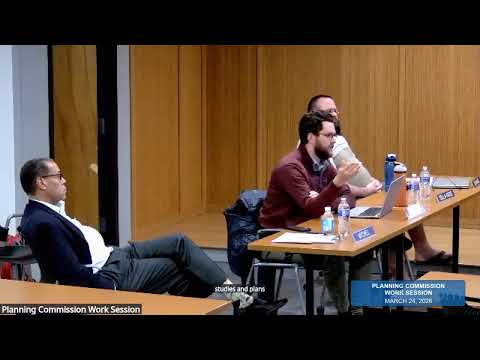
City planning staff told the Charlottesville Planning Commission they will recommend no immediate amendments to the city's homestay (short-term rental) code but asked the commission to back stepped-up monitoring and enforcement.
Missy Creasy, a planning department staff member who led the presentation, said staff have reviewed the decade-old ordinance and gathered data and public feedback. "We have landed at this moment in time with the recommendation to maintain our existing code without any amendments at the moment," she said, adding that staff want to "strengthen monitoring of home stay compliance, permitting requirements, and education about home stay requirements."
Why it matters: short-term rentals are widely used in Charlottesville and generate tax and tourist dollars but also raise concerns about housing availability, neighborhood character, parking and noise. Staff highlighted that new tools and resources could make enforcement more effective before the commission or council undertakes code changes.
What staff presented: planners said they used Granicus software to locate and track online listings and that the system surfaced roughly 529 short-term rental listings in the city that staff are now reviewing to separate compliant permits from unpermitted listings. Todd Divers, the city's Commissioner of Revenue, told the meeting that online platforms now mostly remit transient-occupancy taxes directly to the city and that homestays produced about $1.5 million in lodging revenue compared with roughly $7.6 million from hotels in the most recent year cited.
Enforcement reality: staff and legal advisers repeatedly described enforcement as difficult. Reed Broaddus, the zoning administrator, explained the zoning-code penalty structure: "It's $200 for the first violation, and then every 10 days we can send a $500 violation up to $5,000." Planners said Granicus and added staff capacity should speed detection and follow-up but that proving residency (required now by the code) remains legally and practically challenging.
State law and an open question: staff also flagged a change in state law that would require localities to allow tenants to operate short-term rentals with a landlord's permission if the local code is amended; staff said that uncertainty counsels caution because allowing renters could expand the pool of operators in ways the city cannot yet anticipate.
Public reaction: the meeting drew many hosts and residents who offered sharply different perspectives. Several hosts said short-term rental income is essential to remain in Charlottesville. "My short-term rental keeps my house affordable to me," said Deborah Weiss, who told the commission she has operated an accessory dwelling for years. Other speakers and several commissioners stressed ongoing neighborhood concerns about parking, noise and enforcement.
Next steps: staff said no vote would be taken at the work session. The presentation asked the commission for feedback; staff plan to bring findings and outreach materials to City Council in the coming months and to continue monitoring the effects of the state law and Granicus-identified listings. The commission discussed options such as modifying permit fees or adjusting administrative practice (for example, decoupling annual homestay permit renewal from issuance of a business license) as implementation tools rather than code rewrites.
Staff and commissioners emphasized that further changes would follow additional analysis and public process. The planning office reiterated contact information and the project webpage for written feedback.