Get Full Government Meeting Transcripts, Videos, & Alerts Forever!
Get email alerts on the Local History topic
No spam. Unsubscribe anytime.
Caldwell County unveils permanent America 250 display, outlines yearlong program
Summary
Caldwell County’s America 250 committee unveiled a permanent county history display at the county office building, secured a state cultural grant for the installation and announced a yearlong slate of local events and an online exhibit; organizers said the project intentionally represents all municipalities.
Caldwell County’s America 250 committee unveiled a permanent county history display at the Caldwell County Office Building and outlined a yearlong program of events and online materials to mark the nation’s 250th anniversary, committee members said.
The display, funded in part by a grant from the North Carolina Department of Cultural and Natural Resources, collects photographs, maps, timelines and a short documentary video and is intended to represent every municipality in the county, organizers said. The committee emphasized that the exhibit aims to highlight everyday residents as well as key local milestones.
Why it matters: Organizers said the exhibit is both a public-history resource and a community-engagement tool. Committee members noted Caldwell County’s own milestones — including the county’s 185th anniversary and Lenor’s 175th charter anniversary — and said the wall is meant to encourage residents to explore local history and family connections.
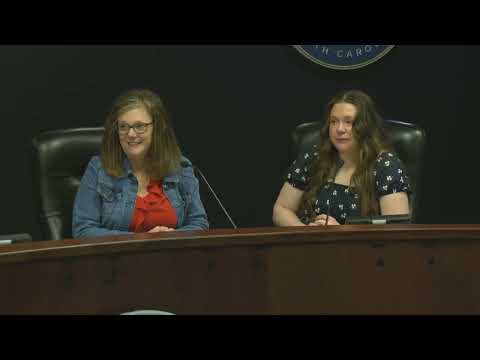
Paige Counts, Caldwell County’s public information officer and the session host, said the display was the product of months of work to narrow a 36-page county timeline into key events and images for the gallery wall. Members credited local historians and collectors for contributing photographs and documents that made the display possible.
Kirsten Mat Banks, the county’s social media manager who led the visual design, said the exhibit includes a short video segment produced from recent storm footage and other community videos and that the county has published the entire display on an America 250 web page for remote viewing. Organizers said the physical exhibit can be viewed during business hours at the county office building; viewing hours are Monday through Friday, 8 a.m. to 5 p.m.
The committee said it sought balanced representation across towns and villages so no single municipality dominates the narrative. "We didn't want one area heavily represented than the other," Brenda Floyd, downtown economic development/main street director for the city of Lenor, said, adding that municipal events will feature America 250 artwork and programming throughout the year.
The group also described a visible, yearlong installation: volunteers and local partners placed a 250-shaped display on High Brighton Mountain as a countywide reminder of the anniversary. Committee members thanked volunteers and local firms — including Blue Ridge Electric linemen and individuals who donated time and materials — for completing the mountain installation at no cost to the county.
The project’s funding and partnerships: Committee members said a state cultural grant supplied materials and initial framing, lighting and fabrication steps; several local museums and historical societies provided photographs and research, and county facilities staff assisted with installation.
Next steps: The committee said the wall is Phase 1 of broader plans that include additional oral-history interviews, municipal events across the county and ongoing updates to the online exhibit. The county’s America 250 page lists upcoming events and the committee’s "stories" video series featuring resident interviews.
Organizers invited residents to visit the display downtown and to access the exhibit and event calendar online. "We hope people will come and see the display and learn more about their own communities," Paige Counts said.
Notes: The committee cited local printed histories and archived collections as sources used for the exhibit. The grant source was identified on the record as the North Carolina Department of Cultural and Natural Resources; the committee did not provide a publicly stated grant dollar amount.