Get Full Government Meeting Transcripts, Videos, & Alerts Forever!
Get email alerts on the Police Station Bond topic
No spam. Unsubscribe anytime.
New Prague council approves preliminary $10.415 million bond authorization for new police station after contentious public hearing
Summary
After a presentation showing the proposed bond stays within statutory debt limits, the New Prague City Council approved resolutions to adopt the CIP and preliminarily authorize up to $10,415,000 in general obligation capital improvement bonds for a proposed replacement police facility amid citizen debate and a looming 30‑day reverse referendum period.
The New Prague City Council voted to adopt a capital improvement plan and to give preliminary approval for the issuance of up to $10,415,000 in general obligation capital improvement plan bonds to fund a proposed replacement police station.
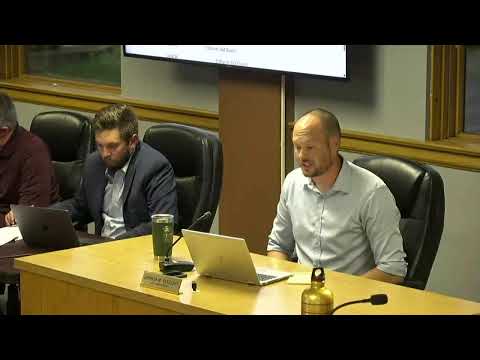
Rebecca Kurt of Ellers presented the updated CIP and a pre‑sale report, saying the documents were revised to reflect actual bids and 2025 market values. Kurt said the city’s statutory net debt limit is about $33.4 million and that adding roughly $11 million would leave more than $20 million of headroom. She estimated annual debt service for the proposed issuance at about $660,000 compared with a statutory CIP cap of roughly $1.78 million, described a 30‑year repayment structure with bonds maturing in 2055 and callable in 2035, and recommended holding a bond sale after the 30‑day reverse‑referendum window.
Public comment was sharply divided. Resident Brian Paulson urged the council to delay or reject the bond and said residents had not been given a meaningful opportunity to weigh in on the project’s need, size and scope; he cited Minnesota Statute 475.21, subd. 3, and said he was organizing volunteers to gather signatures for a reverse referendum. “Residents deserve better,” Paulson said, arguing that the city had effectively signed contracts and allowed site work to start before thorough community planning.
Several speakers pressed for what they called ‘‘value engineering’’ to reduce cost. Joel Wallen said $10.5 million for the proposed station felt excessive and asked that the design go back for cost trimming. “This building could be a third of what it is and still function,” Wallen said.
Supporters framed the project as replacing an outdated facility and preserving civic investment. Gary Whitus, who identified himself as a New Prague resident, said past investments in the city’s sewage plant and fire station paid off in durable facilities. Business owner Austin Revel said the station is a civic symbol and noted shortcomings in the current facility, including lack of private interview space and accommodations for female staff.
Council members debated the pace and prudence of moving forward. Some argued the facility study (completed in 2022 with a final report in 2023) documented space and security deficiencies and that delaying construction risks higher future costs; others raised concerns about the project’s scale given current staffing levels and the potential tax impact on fixed‑income residents. City attorneys told the council that the termination fee and other liabilities tied to stopping a signed contract would be uncertain and depend on ‘‘reasonable and substantiated’’ contractor claims.
On motion, council members approved resolution 2560202 (approving the capital improvement plan and giving preliminary approval to CIP bonds) and resolution 2560203 (providing for issuance and sale of general obligation CIP bonds, series 2025A, in a maximum aggregate principal amount of $10,415,000). Votes were recorded by voice and the motions passed; the transcript does not include a roll‑call tally. Under state law the resolutions trigger a 30‑day reverse‑referendum period during which opponents may gather signatures to force a public vote; staff said a bond sale was being targeted for July 21 to allow time after that window.
Next steps: the council’s resolutions are effective immediately; the 30‑day reverse‑referendum period begins on the date of final publication/approval and will determine whether petitioners can force a citywide vote. The city will also proceed with pre‑sale scheduling unless a successful petition halts the process.