Get Full Government Meeting Transcripts, Videos, & Alerts Forever!
Get email alerts on the Police Station Financing topic
No spam. Unsubscribe anytime.
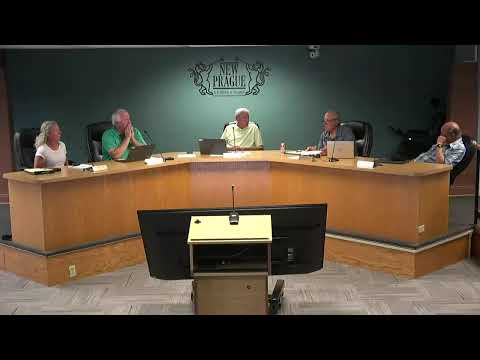
Council approves cleanup change order at police station site and directs staff to pursue EDA lease‑revenue financing
Summary
Council approved a $58,760 change order to address contaminated soil discovered during police station excavation and voted 4–1 to pursue an EDA lease‑revenue bond rather than a voter‑approved CIP bond, citing timing, election cost and cash‑flow tradeoffs.
The New Prague City Council on a split vote approved a change order to cover site remediation at the municipal police station and directed staff to pursue EDA lease‑revenue financing instead of a voter‑approved general obligation (CIP) bond.
Consultant John McNamera of Wald told the council contractors uncovered a buried concrete vault containing petroleum and other contaminants during early excavation and subsequently removed roughly "about 490 tons of contaminated soil hauled off site," with remediation work already completed to allow foundation work to proceed. He asked the council to approve Change Order No. 1, which staff recorded at about $58,760.30, so the contractor can add the work to its contract.
The change order and the funding discussion came at a moment of broad debate over how to pay for the new station. City administrator Josh Tetsoff summarized a staff memo comparing two options: a CIP general obligation bond (lower estimated interest, but requiring a referendum and special‑election timing) and an EDA lease‑revenue bond (higher estimated interest but no voter referendum and faster access to proceeds). Josh told the council the CIP estimate as of July 14 was about 4.614% and that the EDA option could raise funds earlier; he recommended pursuing the EDA lease‑revenue option.
Council members pressed the consultant and staff on how the contamination had been missed in prior soil borings and whether the site might qualify for brownfield or state remediation funds. Staff and the consultant said the contamination was localized and that existing on‑site inspection and contractor supervision have been used to manage work. The consultant said the contamination "wasn't extraordinarily contaminated" and the contractor did not need to truck the soil far for disposal.
Councilors then debated financing tradeoffs, with one member noting staff estimates show roughly $1.2 million more total interest cost for an EDA bond versus GO/CIP bonds but also pointing out that the CIP route would require an off‑year special election, with added administrative expense and timing risks. Alternatives such as temporary internal borrowing (for example from the sanitary fund) were discussed but raised concerns about opportunity cost and the advisability of using dedicated funds for a long‑term capital asset.
On a motion by Councilmember Maggie Bass, seconded by Rick Siler, the council voted to pursue the EDA lease‑revenue financing path; the motion was recorded as passing 4–1. Separately, the council approved Change Order No. 1 to cover the immediate site cleanup; the change order motion passed (recorded as 4–1). The consultant will forward the signed change order to the contractor and staff will continue work on EDA enabling steps and related public hearings required to complete that financing path.
What happens next: staff will work with the city attorney and financial advisors on EDA enabling‑resolution updates and timing, and the EDA will hold required public hearings as the city pursues lease‑revenue financing.