Get Full Government Meeting Transcripts, Videos, & Alerts Forever!
Get email alerts on the Traffic Calming topic
No spam. Unsubscribe anytime.
TAC backs lane‑narrowing striping on Trinity Avenue and seeks speed cushions if funds allow
Summary
The committee recommended edge‑line striping to narrow travel lanes around Trinity Park and to add mountable islands and speed cushions as funding permits, responding to resident reports of wrong‑way driving and high speeds near the park used by children and seniors.
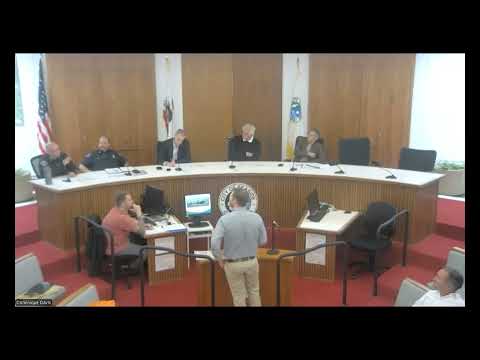
The Traffic Advisory Committee on April 21 recommended edge‑line striping with painted or mountable islands as the preferred near‑term traffic‑calming measure for Trinity Avenue, with speed cushions to be added if funding allows.
Aaron Han, junior engineer, presented multiple options including edgeline striping to visually narrow travel lanes (estimated about $16,000), two asphalt speed cushions (about $19,000), angled parking layouts and speed‑feedback signs (about $23,000). Staff recommended edgeline striping as a cost‑effective first step that can be implemented quickly; any cushions or other measures would be subject to available funding and engineering review.
Several residents urged robust traffic calming. An applicant and neighborhood resident described frequent wrong‑way driving by commercial trucks and high speeds. “There’s over a dozen and a half kids around that area,” the Trinity applicant said, urging measures to reduce speed and improve pedestrian safety. Another resident, Doug Goldman, said he regularly sees drivers using Trinity as a cut‑through and supported physical calming measures.
Some speakers opposed angled parking, saying it could reduce sight lines or make driveway access harder. After discussion the committee moved to recommend the edgeline striping with mountable islands and to add speed cushions if funds are available; the motion passed by voice vote. Staff agreed to confirm available funds in the traffic‑calming line item, finalize an engineering layout and include the recommendation in the City Council packet so work can proceed when funding is authorized.
Committee members emphasized that cushions should be the mountable, modular style that can be relocated if needed and that the measure should preserve emergency vehicle access. Staff will prepare cost estimates and a council recommendation that includes funding status and suggested phasing.