Get Full Government Meeting Transcripts, Videos, & Alerts Forever!
Get email alerts on the Events topic
No spam. Unsubscribe anytime.
NCPC says Pennsylvania Avenue redesign will support existing events but seeks input on noise, staging and neighborhood impacts
Summary
NCPC staff and consultants told attendees the plan is not intended to preclude existing events (about 150 per year), that they are studying acoustics and event infrastructure to reduce spillover to adjacent neighborhoods, and that construction phasing will aim to keep portions of the avenue open.
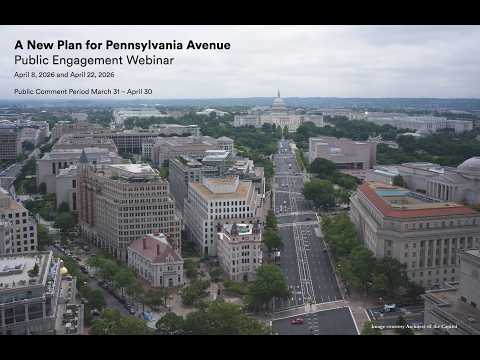
At a public webinar on the Pennsylvania Avenue public‑space master plan, NCPC staff and the consultant team emphasized that the project intends to support the avenue’s heavy event calendar while reducing neighborhood disruption.
Beth Miller of NCPC told attendees the Avenue hosts roughly 150 events in a typical year and that the design effort is explicitly considering how to make event setup and tear‑down easier. “We have a lot of permit data and understand that the Avenue on any given year hosts around 150 events per year,” she said, adding that the team is coordinating with the National Park Service, the mayor’s special events task group and other event producers.
Why this matters: Pennsylvania Avenue currently serves both large national gatherings and everyday public life; several questions from residents concerned acoustics, access and event noise. The consultant team said event‑production specialists and an acoustician are part of the team and are exploring modern sound‑distribution systems and built‑in event infrastructure (power, staging utilities) to localize sound and reduce spillover.
Presenters described design moves to retain event capacity even where plaza configurations change, including diagonal parade routing across Freedom Plaza options and locating integrated utility infrastructure near primary event spaces to reduce reliance on large temporary speaker stacks. The team emphasized coordination with permitting authorities; presenters said the plan would not change existing permitting structures.
Construction and phasing: team members said implementation timing depends on funding and partner priorities and that construction will be phased to preserve access and respect the inauguration schedule, with no full closure of the avenue beyond constraints set by parade scheduling. “My guess would be that there's never a time where the entire avenue is closed,” a consultant said, noting that block‑by‑block work or targeted interventions are likely depending on funding.
What residents should watch for: upcoming design refinements that specify event utilities, acoustic mitigation, pedestrian circulation during events and traffic phasing; scoping comments submitted before April 30 will be considered in the NEPA and design process.
The webinar Q&A also invited real‑world examples and public input through an in‑person exhibit at the National Building Museum running through April 30.