Get Full Government Meeting Transcripts, Videos, & Alerts Forever!
Get email alerts on the Budget topic
No spam. Unsubscribe anytime.
East Grand Forks officials preview 2026 budget; staff warn of possible 15% property tax lift
Summary
City staff told the council that a strong 2024 year-end — a $943,000 increase in general fund reserves — gives flexibility, but a preliminary 2026 package as presented would leave roughly an $862,310 gap that could require about a 15% property tax levy increase if fully closed by taxes.
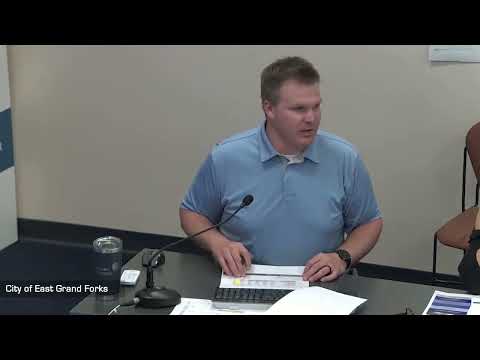
City staff presented a high-level preview of the proposed 2026 budget to the East Grand Forks City Council on an evening meeting, saying the city closed 2024 with a stronger-than-expected reserve and outlining items that drive a projected budget gap.
"Our general fund reserve balance increased by $943,000 to close 2024 year end," Reed told the council during the presentation, citing uncollected back property taxes recovered and lower-than-expected winter operations costs as the primary causes of the improvement.
The presentation reviewed 2025 figures and the preliminary 2026 assumptions. Staff said projected total revenue for 2025 was roughly $13,711,000 and that the 2025 property tax levy was set at a 3% increase; the 1% levy value cited for the current year was $71,379. For 2026, staff included a baseline 3% levy in the draft numbers, an increase REED said would add about $214,139 in revenue.
Why it matters: local property tax levies and state aid heavily affect the city’s options. Reed said 2026 Local Government Aid (LGA) to the city is estimated at $2,468,772 — slightly higher than 2025 but still below 2014 levels — and warned that state budget pressures could make LGA a recurring issue for municipal budgets.
Staff called out several revenue and expenditure drivers. On the revenue side, park and recreation ice rental income is expected to decline while the city schedules a major ice facility project next summer; staff also noted a proposed $12,000 reduction in the city's contribution for the drug task force staffing allocation. On the expenditure side, staff built in estimated increases for labor and benefits: about $322,000 for salaries and wages (including step increases and part-time changes), roughly $130,000 for health insurance to reflect insurer proposals, and an estimated $56,000 to fund the state paid family leave program starting Jan. 1, 2026.
Reed said the current draft, which includes a 3% levy, shows an approximate $862,310 deficit. "As it stands today, all of the projects and operations salary shows an $862,310 deficit," he said, and cautioned that if the gap were closed entirely by property taxes it would equate to roughly a 15% levy increase from 2024. He stressed multiple options remain — further use of reserves, expenditure reductions, or alternative revenues — and that staff will return with more detailed scenarios.
The presentation also included planned capital and equipment requests: picks for the fire and parks departments ($60,000 and $65,000 pickups, respectively), police equipment (drones quoted at $9,000, an 800 MHz radio system, vehicle replacements and an SUV intended to become the school resource officer vehicle), a transit class-400 bus (city match required, with additional state and federal aid anticipated), replacement interview-recording equipment, continued taser program expenses under an existing contract, and an annual IT refresh ($30,000 for computers and $18,000 for software).
Staff explained how larger capital purchases are typically financed: an upfront purchase followed by annual payments spread over roughly nine years, with two larger items highlighted for 2026 — a fuel island/pumping station upgrade and a large parks mower replacement. Reed noted that most other capital payments are already committed to past purchases.
Carla — who distributed the printed handouts — said the packet corresponds to the slide presentation and highlights project payments and one-time purchases for council review after the meeting.
Mayor Olstead confirmed the 1% levy value used in the calculations and staff reminded the council of the schedule: a work session will revisit enterprise funds and additional general fund items next week, the council hopes to set a preliminary levy before the Sept. 30 deadline, and the final budget must be certified by the end of December (with the caution that preliminary levies may be reduced but not increased after certification).
There was no substantive public comment at this meeting. Council member Riapel moved to adjourn; Pakshinsky seconded and the motion passed by voice vote.
Next steps: staff will provide a full budget packet to council members (to be sent after the meeting or the following morning) and will return with more detailed options that show combinations of reserve use, expenditure reductions, and levy scenarios prior to preliminary levy certification.