Get Full Government Meeting Transcripts, Videos, & Alerts Forever!
Get email alerts on the Minerals Tax Distribution topic
No spam. Unsubscribe anytime.
Senate panel hears minerals tax plan to steer new Iron Range mine revenue to schools and towns
Summary
A bipartisan minerals article (Senate File 2766) presented to the Senate Taxes Committee would lock in production‑tax distributions for two years, target per‑ton payments to Iron Range school districts and municipalities, and exclude the new Mesabi/Missabi metalllics project from certain Taconite Economic Development Fund disbursements; the bill’s authors said it does not raise taxes.
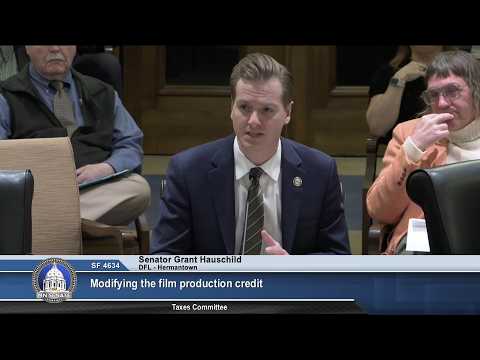
Senator Hauschild, the bill’s sponsor, told the Senate Taxes Committee on April 20 that Senate File 2766 aims to prepare the Iron Range for the first new taconite/metallurgical iron‑ore mine in roughly 50 years by setting distribution rules for production taxes that benefit local schools, townships and small cities.
"This bill does not raise taxes," Senator Hauschild said, adding that the measure instead redistributes proceeds from the existing production tax structure to ensure local recipients receive predictable funding "before the mine is open." He described the proposal as bipartisan and said it uses 2023 distribution levels as a short‑term baseline and includes a two‑year guaranteed minimum.
The bill contains multiple technical changes: a backfill mechanism that would draw on the Doug Johnson Economic Protection Trust Fund if distributions fall short; prohibitions preventing Mesabi Metalllics from receiving certain Taconite Economic Development Fund (TDF) payments; targeted per‑ton allocations (including fixed $100,000–$150,000 payments to specific school districts and $25,000–$75,000 municipal grants); and an allocation of $0.20 per ton to an Iron Range schools and community development account through 2050. The sponsor said the measures are triggered by the mine’s production start and require certification by the commissioner.
Charles Sutton, representing the owners of the Mesabi/Essar project, described the mine as a late‑stage, multibillion‑dollar private investment employing roughly 850 union construction workers and stressed that the company supports investments that benefit schools and local governments. Sutton also warned that barring the new operator from the TDF could undermine future investments: "We would encourage the authors to look at solutions that treat all facilities...we should be eligible for the same rebates," he said, noting the company plans continued investments to improve efficiency and environmental performance.
Committee members asked technical questions about specific line‑item changes and the source of backfill funds; the sponsor acknowledged ongoing discussion among delegation members about the potential future role of the Doug Johnson fund. The committee adopted an author's amendment early in the hearing and left the bill available for follow‑up testimony and amendment.