Get Full Government Meeting Transcripts, Videos, & Alerts Forever!
Get email alerts on the Social Media Policy topic
No spam. Unsubscribe anytime.
County staff propose consolidated social-media policy with ADA additions; commissioners ask for campaign-use clarifications
Summary
Spokane County staff proposed replacing two older policies with a consolidated social-media policy that adds ADA compliance measures (captions, accessible tags) and a contractor-disclaimer approach; commissioners requested clearer language about elected officials' campaign use of county media and a possible process for providing official media to campaigns.
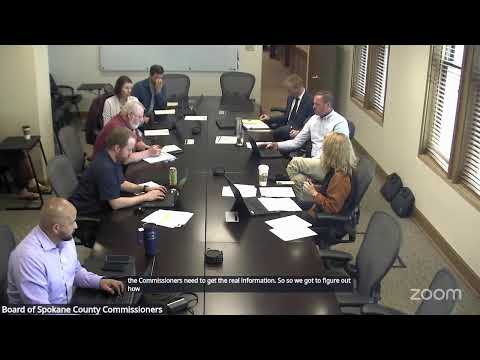
County staff briefed the board on an update to Spokane County's social media policy on April 27, 2026, proposing to replace two existing policies (446 and 447) with a consolidated policy that reflects current practice and adds ADA accessibility requirements.
Martha Loop introduced the update and said the current policies dated to 2012 and needed modernization. Sharesa (the county's social media lead) and Paul Alexander (civil attorney) described the main changes: combining organizational and personal social media policies into a single, easier-to-reference document; adding ADA-focused requirements (captioning and tagging guidance for videos); clarifying responsibility and approval processes for department accounts; and implementing a form and approval workflow for creating new county social accounts.
Staff proposed a contractor-disclaimer approach for contractor-posted commercial content: contractors would include a clear disclaimer that their posts represent contractor communications, not county speech, and staff said the language was designed to balance free-speech concerns with DOJ accessibility obligations if federal ADA rules are implemented.
Commissioners asked for additional guidance about elected officials and campaign use of county resources. Staff said the policy would apply to departments of elected officials and noted they would add clarifying language to avoid county resources being used for campaign purposes and to outline any practical options (for example, a repository or fee-based access for official county media if the board wanted a process similar to other jurisdictions).
Staff said the ADA components echo work done for county websites and that training for departments would be scheduled. The policy update was presented as a first pass; staff will run the draft through labor and final legal review and return with a redline for formal consideration.