Get Full Government Meeting Transcripts, Videos, & Alerts Forever!
Get email alerts on the Critical Minerals topic
No spam. Unsubscribe anytime.
Subcommittee chair frames critical-mineral supply chains as national-security issue, proposes H.R. 4370
Summary
The House Energy and Commerce Subcommittee on Environment opened a hearing focused on how U.S. environmental laws affect critical-mineral supply chains, with the chair citing Chinese market dominance and introducing H.R. 4370 to codify policies aimed at reshoring mining and processing.
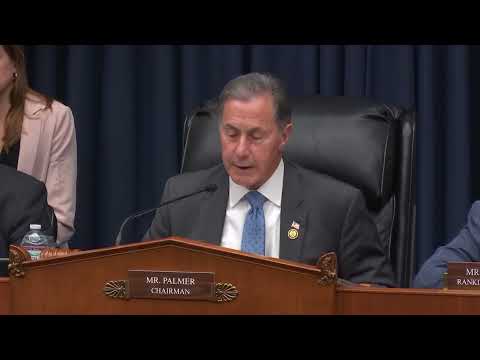
The Subcommittee on Environment of the House Committee on Energy and Commerce opened a hearing April 22 to examine how U.S. environmental laws affect domestic critical-mineral supply chains. The chair said the issue is central to both national security and economic growth and urged legislative action to support onshore production and processing.
The chair argued that the United States once led in producing and refining critical minerals but that, ‘‘over the past several decades, China has aggressively sought to dominate the global market for critical minerals,’’ and that much of the ‘‘black mass’’ recovered from lithium-ion batteries is shipped to China for recycling. He said recent executive orders aim to reshore parts of the supply chain and introduced H.R. 4370, titled the Securing America's Medical Supply Act, which he said would codify federal policies to support domestic mining and processing.
Why it matters: The chair framed the matter as a policy trade-off between environmental protections and rebuilding a domestic industrial base for minerals used in defense and clean-energy technologies. He said the Energy and Commerce Committee’s broad jurisdiction makes it a fitting venue to consider statutory reforms, including changes to the Toxic Substances Control Act, to enable production and downstream processing in the United States.
The chair also noted the timing of the hearing on Earth Day and stressed that restoring domestic processing requires attention to the entire supply chain — from chemical and energy inputs needed to process ores to facilities for recovery and recycling. He emphasized that increasing mining without supporting the processing and recycling steps would be ineffective.
Panelists introduced for the testimony included Chris Lehman, chief development officer for Principal Mineral; Dr. Ul Baya Spiller, fellow and transportation program director with Resources for the Future; Jane Neal, senior vice president for AMG Vanadium; and Josh Grushkin, associate general counsel for Redwood Materials. The chair said the panel will discuss practical challenges to securing domestic supply chains for critical minerals.
The hearing record at this point consists of the chair’s opening statement and witness introductions; no committee votes or formal actions on H.R. 4370 were recorded in the provided transcript excerpt. The committee proceeded to receive testimony from the panelists after the introductions.