Get Full Government Meeting Transcripts, Videos, & Alerts Forever!
Get email alerts on the Municipal Budget topic
No spam. Unsubscribe anytime.
Isanti council reviews 2026 budget proposals, flags dues, codification and attorney costs
Summary
At a May budget work session, Isanti City Council and staff reviewed 2026 operating budgets and the CIP, debated where to allocate League of Minnesota Cities dues, trimming codification and city attorney spending, and asked staff to seek cost-saving options for technology and contracted legal work.
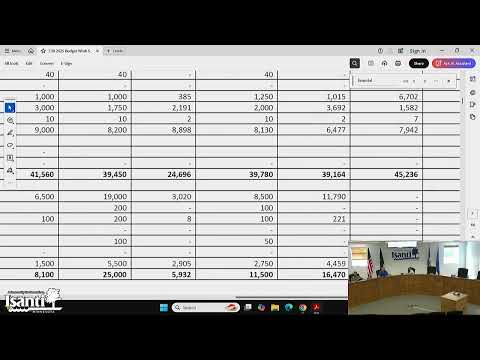
Isanti City Council met in a budget work session to review the proposed 2026 operating and capital budgets, focusing on the general fund, technology, pavement management and the city’s remaining debt service. Staff walked through department line items and the council pressed for clearer allocation of citywide fees and potential savings.
The session began with staff presenting the order of review: council, elections, administration, finance, police, pavement management, street reconstruction, technology (Fund 614) and debt service (Fund 931). Councilors asked detailed questions line by line, seeking to understand what is truly council‑specific spending and what is a citywide cost that should sit elsewhere in the document.
A point of contention was a $9,000 League of Minnesota Cities (LMC) dues line currently budgeted under the council. Council Member Peterson questioned placing the whole membership fee in the council budget given that staff and multiple departments use LMC resources; staff said the line was historically budgeted there and agreed to reclassify it under administration or another citywide account to improve transparency. Staff also agreed to check that the membership is not double‑budgeted in other departments.
Council members and staff also discussed the city’s codification contract — the service that converts adopted ordinances into the online city code. Staff explained the city pays a flat maintenance fee plus per‑page codification charges when ordinances are batched for codification. One council member suggested consolidating ordinance changes into fewer codification runs to reduce per‑page charges; staff agreed to lower the contingency in contracted services for 2026 and monitor codification needs through the year.
On professional services, councilors flagged the variance in historical city attorney spending and asked whether the city should lean more on LMC legal resources before engaging outside counsel. Staff reported typical hourly rates (labor attorney about $190 per hour, associate attorneys lower) and recommended a modest reduction in the attorney line to reflect recent spending patterns while retaining flexibility for unforeseen personnel or litigation matters.
Council instructed staff to research alternatives and bring proposals back — including reclassifying LMC dues under a different fund, consolidating codification runs, seeking competitive quotes for recurring technology contracts, and setting a clearer consult‑LMC‑first practice for legal questions. The council set a follow‑up schedule and asked for revised budget documents ahead of the preliminary levy timeline.
The next procedural step is for staff to produce updated budget worksheets and CIP adjustments for a future work session where the council will consider preliminary levy figures.