Get Full Government Meeting Transcripts, Videos, & Alerts Forever!
Get email alerts on the Rules Committee Rule topic
No spam. Unsubscribe anytime.
House Rules Committee approves structured rule for farm bill after hours of contentious debate over blocked amendments
Summary
After hours of debate and repeated roll-call votes, the House Rules Committee approved a structured rule to consider H.R.7567 and other measures. Members on both sides accused the majority of blocking amendments and shutting colleagues out of the process, while others urged immediate floor action on funding measures.
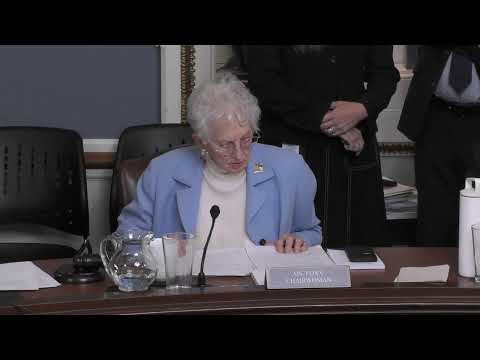
The House Rules Committee on May 1 approved a structured rule to govern floor consideration of H.R.7567, the Farm, Food and National Security Act of 2026, after a long meeting dominated by dispute over which amendments would be allowed.
The rule, introduced by the gentleman from Georgia, Mr. Scott, waives certain points of order, deems an amendment-in-the-nature-of-a-substitute adopted and sets out which further amendments may be offered and in what order. The motion to grant the rule was debated at length and ultimately approved by the committee.
Representative Jim McGovern (Massachusetts), the committee’s senior Democrat, led repeated objections to the process, arguing that “a lot of very consequential and important amendments were just blocked” and that the committee’s handling of amendments showed “dysfunction.” He moved to adjourn the meeting at one point and again pressed for more amendments to be made in order; those motions failed on recorded votes.
Other members urged different priorities. Representative McGovern and supporters repeatedly asked for votes on the Senate-passed Department of Homeland Security funding measure, saying the White House had warned DHS payrolls could not be guaranteed unless action was taken. “You can end the shutdown tomorrow,” McGovern said in urging immediate consideration of the Senate language; lawmakers on both sides pushed competing views about whether the committee should force immediate consideration or defer to floor procedures and whips.
The hearing also featured extended debate over provisions tied to national security and civil liberties. Several amendments related to S.1318 (FISA and section 702) were offered, including proposals to impose warrant requirements for certain queries and limits on reverse targeting. Supporters of stronger checks argued for constitutional protections and debated whether inspector-general reviews or criminal penalties should apply for query violations; those proposals were debated and in many cases rejected by recorded votes.
A major theme in the meeting was frustration with the number of amendments the majority did not make in order. Members from both parties — including several Republicans who said their own conference amendments were blocked — criticized the Rules Committee for narrowing debate. “We’re getting so used to shutting things down,” one member said, adding that the frequency of closed rules had become a pattern the committee should reconsider.
The meeting produced dozens of roll-call votes on individual amendments. Measures to restore or delay SNAP (food assistance) cost shifts, expand program eligibility for certain populations, and to address supply-chain or tariff impacts on agriculture were among the amendments proposed; most were defeated in the committee.
At the end of the session the committee reported the rule. The chair designated the managers for the majority and minority and adjourned the meeting.
What happens next: with the Rules Committee having reported the structured rule, the House floor is expected to consider the rule and the bills it governs. Members warned that the narrowness of the rule and the number of blocked amendments could complicate floor passage and prompt additional procedural fights.