Get Full Government Meeting Transcripts, Videos, & Alerts Forever!
Get email alerts on the Homelessness topic
No spam. Unsubscribe anytime.
Palaca commission moves to convene stakeholders on shelter options after debate over Cooper building
Summary
Under public pressure and amid differing staff recommendations, Palaca commissioners directed staff to convene county, school, faith-based and service providers to craft a sustainable, countywide shelter plan and to investigate a mobile 'sleep bus' option.
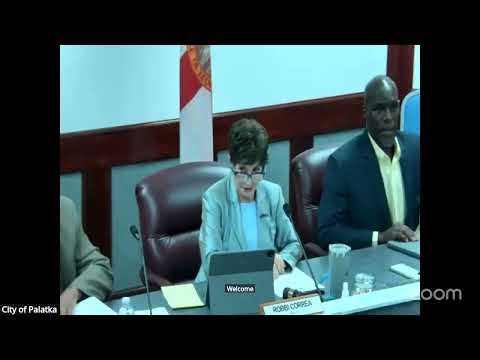
Commissioners on April 23 directed staff to convene county officials, the school district, faith-based organizations and other stakeholders to develop a comprehensive approach to homelessness and to further investigate a mobile "sleep bus" option after weeks of internal review. The motion grew out of detailed staff briefings on city-owned properties and community feedback about siting and services.
Staff member Mr. Cutright reviewed multiple city-owned properties for use with the Rise program and identified the Willer Cooper building (a partially vacant city property) as the fastest short-term option while noting that staff paperwork also named Price Martin Community Center as a strong candidate once necessary hardening work is complete. Cutright said limited renovations (sprinklers, fire alarms and other low- to moderate-cost upgrades) could bring a Cooper building location online quickly; an early rough figure cited in discussion was about $130,000, with the sprinkler/alarm components forming the bulk of that estimate. Commissioners and public speakers flagged inconsistencies in the staff packet (dated references and arithmetic in ARPA allocations), and some residents urged locating any shelter in a commercial area rather than next to parks or daycare centers.
Commissioner Davis and others emphasized that any city action must be sustainable and countywide in scope: "Somebody's going to have to own this," she said, urging county participation and wraparound services. Commissioners voted unanimously to convene stakeholders and to authorize staff to research the sleep-bus option (a mobile unit capable of sheltering about 20 people overnight), with staff to report back with a detailed plan including funding sources, eligibility criteria, and proposed governance.
Public commenters—including volunteer service providers and pastors—stressed urgency, practical needs (showers, hygiene, case management) and the importance of partnering with existing local organizations. Some residents urged that the Price Martin facility or Port Consolidated (which staff had flagged in a separate remediation update) could be better-located options pending repairs and clarifications.
Next steps: staff to coordinate stakeholder meeting(s), present financial options and timelines, and return with a proposed operational model that includes wraparound services and eligibility criteria. The commission emphasized that any locally funded solution should seek county and nonprofit participation to ensure sustainability.