Get Full Government Meeting Transcripts, Videos, & Alerts Forever!
Get email alerts on the Mural Conservation topic
No spam. Unsubscribe anytime.
Conservator reports strong results from midtown mural treatment; committee hears $40k–$60k restoration estimate
Summary
Kiernan Gray told the Public Art Advisory Committee that small-scale tests on the midtown mural successfully removed a deteriorating coating, but the treatment also strips a 2022 restoration layer. She gave ballpark labor and materials estimates and said the original artist is relocating, so licensed conservators will likely be needed.
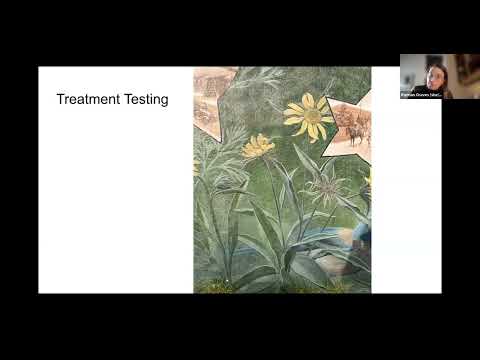
Kiernan Gray, who led recent conservation tests on the midtown mural, told the Brisbane City Public Art Advisory Committee on April 20 that small, 3-by-3-foot trials conducted in February removed a failing opaque coating and exposed underlying paint in substantially better condition than expected.
Gray showed before-and-after images and said the treatment — a solvent–surfactant 'nanogel' produced in collaboration with a University of Florence vendor — “worked much better than I expected.” She described the coating peeling in places “almost like burnt skin,” and said the materials appeared to selectively remove the deteriorated original coating without harming the underlying paints in the test areas.
The committee heard an important constraint: the treatment also removes the restoration paints applied in 2022, so any full-scale conservation will require reapplication of restoration paint. Gray said she spoke with the 2022 restorer, Mona, who is relocating to Switzerland and likely unavailable to do the follow-up work; accordingly, the committee should plan to hire a conservator or a conservator-led team rather than rely on the original artist.
Gray described ongoing conversations with the Getty Conservation Institute’s science staff and with 3M about developing more durable polymer coatings. She cautioned such research “moves glacially” but called the collaborations potentially useful for future protective layers that could reduce graffiti or environmental damage.
On cost and timeline, Gray said she completed 18 square feet in two days during testing. Extrapolating from that pace, and using a reduced public-art conservator rate she cited at about $800 per day (with approximately a 30% public-art discount), she estimated roughly 50 conservator days for the entire mural and a labor-only figure in the neighborhood of $40,000. With materials added, she gave a broad materials-inclusive range of about $50,000–$60,000, though she emphasized these are preliminary, ballpark figures. Gray also noted some access- and repair-related items (scaffolding and targeted substrate repairs) with a separate figure near $4,400.
Gray said the materials vendor currently lacks the capacity to produce the treatment agents in bulk, though a larger or more serious project might yield lower unit costs. She also said an insurance claim related to the earlier adhesive failure might offset some costs; she estimated a potential insurance contribution near $10,000 but said the insurer’s final payment remains unresolved.
The committee asked Gray to produce a formal cost estimate and supporting documentation; Gray said she would post the presentation and could provide a more detailed budget and schedule. The committee thanked her for the update and discussion concluded with staff and members noting next steps for a formal procurement and conservation plan.