Get Full Government Meeting Transcripts, Videos, & Alerts Forever!
Get email alerts on the Drought topic
No spam. Unsubscribe anytime.
Columbia County manager urges water conservation as statewide wildfire emergency expands
Summary
County Manager Scott Johnson urged residents to conserve water, follow a 30‑day statewide burn ban and heed watering restrictions after Governor Kemp declared a state of emergency for 91 Georgia counties amid widespread wildfires.
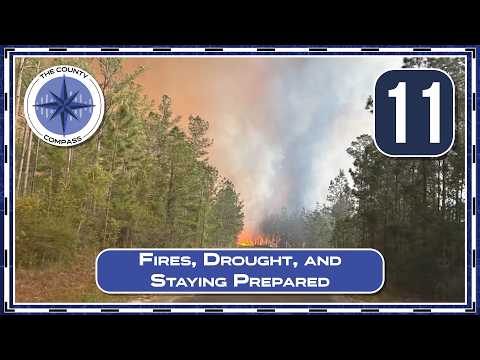
Scott Johnson, Columbia County manager, used the County Compass podcast to urge local water conservation and compliance with a statewide burn ban after Governor Brian Kemp declared a state of emergency for 91 of Georgia’s 159 counties because wildfires have surpassed the state’s five‑year average.
Johnson described the order as a tool to speed resource deployments and enable cost reimbursements for affected counties. “With much of Georgia remaining in extreme drought conditions, wildfires have already surpassed the state's 5‑year average and continue to spread,” he read from the governor’s statement and said the declaration helps state agencies move personnel and equipment more quickly.
The Georgia State Forestry Commission has issued a 30‑day ban on outdoor burning in the same 91 counties. Johnson said the ban prohibits yard debris, agricultural material and prescribed burns and is intended to prevent new fire starts that could worsen the situation.
Why it matters: the burn ban and state of emergency change how resources are mobilized and set expectations for residents and landowners. Johnson warned that dry fields can rapidly become residential conflagrations if winds shift, and he urged caution with grills, fire pits and any backyard burning.
Johnson stressed that Columbia County has a dual‑source water system drawing from Clarks Hill Lake and the Savannah River and said the county is not in immediate danger of running out of water. “The answer is no. We are not going to run out of water,” he said, while adding that conservation now preserves capacity and supports downstream neighbors who share water sources.
The county reported that the area has received about 17 inches less rain than normal over the last 16 months; state monitoring places the county at a level‑one drought under Georgia’s three‑tier system, which triggers public information campaigns and voluntary conservation measures. Johnson named the county’s public relations director, Cassidy Harris, as the lead on outreach to explain what level‑one rules mean locally.
Residents must follow the statewide restriction that bans lawn irrigation between 10:00 a.m. and 4:00 p.m.; Johnson advised watering in the early morning or after sunset, reducing watering frequency, checking irrigation systems for leaks and using smart controllers or rain sensors. He recommended switching beds to drip or soaker hoses, letting grass grow slightly taller to shade soil, and fixing household leaks.
Johnson directed residents to contact Columbia County fire and emergency management for help with smoke detectors and evacuation plans. He also encouraged neighbors to check on elderly residents who might need assistance with yard work or water‑conserving measures.
Next steps: Johnson said the county will continue coordinating with state and federal partners, monitor EPD drought assessments, and update residents if conditions escalate to higher drought levels or require enforcement.