Get Full Government Meeting Transcripts, Videos, & Alerts Forever!
Get email alerts on the Ambulance Safety Standards topic
No spam. Unsubscribe anytime.
Crash reviews find low restraint use among ambulance crews and point to design and standards updates
Summary
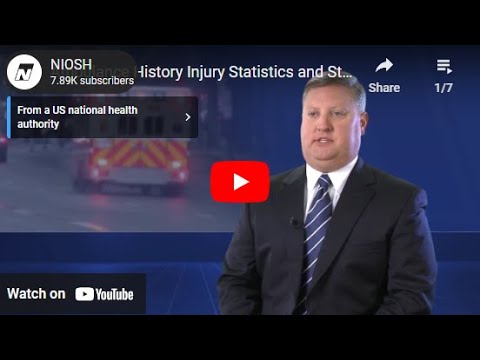
A federal review and related research cited in a government video found low seat-belt use by EMS workers riding in ambulance patient compartments, linked that behavior to higher injury and ejection risk for patients, and urged use of updated GSA, NFPA and CAAS standards and a human-factors guidebook when buying or retrofitting ambulances.
Federal crash investigations and two decades of fatal-crash data have highlighted persistent safety risks inside ambulance patient compartments and pointed to vehicle design and standards as key levers for reducing injuries, the narrated video says.
The video reviews findings from the National Highway Traffic Safety Administration and related research showing a gap between drivers and rear-cabin occupants: "81% of ambulance drivers were wearing their safety belts but only 20% of EMS workers and their passengers in the back were wearing their safety belts," the presenter states. It adds that unbelted rear occupants were roughly four times more likely to be injured or killed in serious crashes.
Why it matters: the presenters say restraint use matters for both crew and patient safety. The video cites an NHTSA review of two decades of crash data that estimated about 4,500 ambulance crashes per year in the United States (1992–2011) and reports an estimated nine persons killed inside ambulances each year, though it notes uncertainty about whether those fatalities were EMS personnel or patients.
The video summarizes evidence on patient restraints: "Based on a review of ambulance crashes with patients onboard, almost 90% of those patients who were restrained with the shoulder harness remained belted to the cot, while more than half those without the shoulder restraint were ejected," it says. It also reports that in 44% of crashes with serious patient injuries, the patient was not wearing a shoulder harness.
Standards and response: the video explains that three comprehensive "bumper-to-bumper" standards describe minimum requirements for ambulance construction and related crash tests: the GSA Federal Specification (KKK-A-1822, often called the K Spec), the National Fire Protection Association's NFPA 1917 Automotive Ambulance Standard, and the Commission for the Accreditation of Ambulance Services' Ground Vehicle Standard (GVS v1.0). The presenters note the GSA specification was written for federal purchases, that states sometimes adopt federal language into state standards, and that state EMS offices determine which standard applies locally.
Development timeline and testing: the video recounts NFPA 1917's standards-development work (committee formed in 2009; first edition published Sept. 2012, effective Jan. 1, 2013; second edition Sept. 2015, effective Jan. 1, 2016) and the CAAS GVS v1.0 release (published March 28, 2016; effective July 1, 2016). It also notes that new Society of Automotive Engineers (SAE) test methods have been incorporated into recent editions and that the three standards reference multiple related tests covering items from upholstery to lighting.
Practical guidance: the video urges purchasers to check with their state EMS office to determine which standard applies and to consult the Ambulance Patient Compartment Human Factors Design Guidebook when arranging seating, equipment and controls to improve both patient care efficiency and worker safety. The presenter summarizes the safety takeaway bluntly: "When in the back of the ambulance, you should sit down and buckle up at all times."
What remains unresolved: the video describes data limitations (for example, it says investigators are "not sure" whether the estimated nine annual in-ambulance fatalities were EMS personnel or patients) and emphasizes that rider behavior and compartment design both influence safety outcomes. It recommends following updated standards and human-factors guidance and verifying state requirements before purchases or conversions.
The video closes by directing viewers to companion modules and the human-factors guidebook for more detail and to state EMS offices for local regulatory questions.