Get Full Government Meeting Transcripts, Videos, & Alerts Forever!
Get email alerts on the Preschool Program topic
No spam. Unsubscribe anytime.
Special services coordinator proposes aligning preschool hours with school‑age schedules to cut bus runs and ease family logistics
Summary
Alison, the district special services coordinator, recommended shifting preschool sessions and placing preschoolers on school‑age bus routes to reduce duplicate runs, ease breakfast service and improve family convenience; preliminary estimates show about $25,000 in transportation savings but operational and special‑needs routing challenges remain.
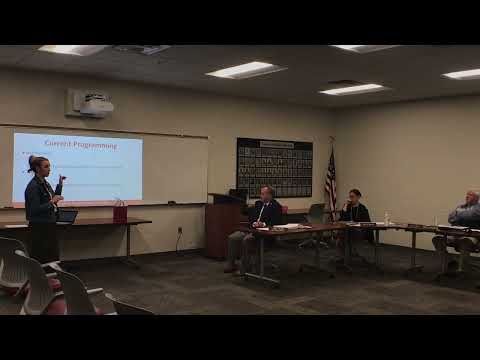
Alison, the district’s special services coordinator, told the Canton Local Board of Education on April 20 that the administration is proposing to realign preschool start and end times to match elementary school schedules and place preschool students on existing school‑age bus routes where appropriate.
The proposal would change morning preschool from the current window to about 8:10 a.m.–11:20 a.m. and the afternoon session to roughly 12:00 p.m.–3:10 p.m., bringing preschool arrivals and dismissals closer to school‑age times. Alison said the change aims to reduce duplicate AM and PM bus runs, simplify breakfast and lunch service for preschoolers, and make family pickup and drop‑off less burdensome.
The district reviewed four areas—financial, community, staffing and operations—and identified key challenges: currently preschool‑only routes require both a driver and an aide; separate breakfast menus and service windows for preschoolers add operational complexity; and preschool staff often cannot attend routine building meetings because those occur outside contracted hours. Alison said the district must preserve a required 3 hours and 10 minutes of programming per session under the Ohio preschool program grant while limiting transition time that would reduce instructional minutes.
Alison described several operational details under consideration: placing the youngest preschoolers toward the front of school buses, using older (fifth‑grade) student leaders on routes to assist, maintaining a midday run so some families are still served at midday, and coordinating pull‑off spots and staff staging for parent pickup to limit traffic congestion. She also said some districts (named in the discussion as Fairless and Brown) use similar routing models.
The district has identified potential complications. Students who require harnesses or quieter, smaller settings may still need modified routes or smaller vehicles; changing breakfast service for preschoolers could require carts or grab‑and‑go bags rather than traditional cafeteria trays; and routing differences between morning and afternoon runs could mean the number of added preschoolers per bus varies. Alison said preliminary routing work shows only a modest number of additional preschool seats per school‑age bus (about one to three seats in many cases).
On costs, Alison cited preliminary transportation savings of roughly $25,000 based on early estimates. Board members asked whether parents had been consulted; Alison said informal outreach had produced generally positive responses but recommended formal parent communication if the board moves forward. She also noted staffing and contractual questions remain—particularly around whether after‑school attendance by preschool staff would affect their Friday planning time—and that training for transportation staff and student bus leaders would be necessary if preschoolers ride with older students.
The presentation closed with the district team continuing to "work out the bugs" and a request for the board to consider the tradeoffs between cost savings and operational complexity. The board followed with multiple clarifying questions but took no formal action recorded in the transcript at the meeting.