Get Full Government Meeting Transcripts, Videos, & Alerts Forever!
Get email alerts on the Energy Generation topic
No spam. Unsubscribe anytime.
Dominion Energy outlines proposed Cumberland Energy Center; neighbors raise noise, lighting and water concerns
Summary
At a May 12, 2026 Cumberland County Board of Supervisors meeting Dominion Energy presented plans for a combined‑cycle natural‑gas generation station off Duncan Store Road, projecting roughly 3 GW of capacity and sizable tax revenue; residents pressed the company on proposed 65 dB noise levels, nighttime lighting and water use.
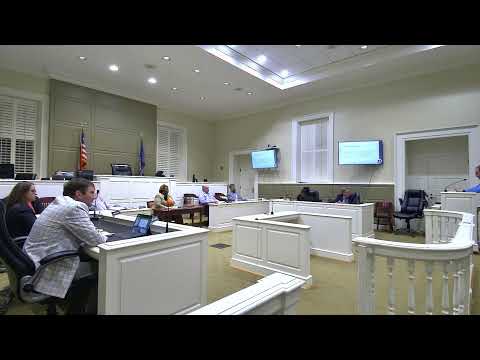
Dominion Energy representatives on May 12, 2026 told the Cumberland County Board of Supervisors they intend to develop the Cumberland Energy Center, a combined‑cycle natural‑gas generation plant proposed off Duncan Store Road that company presenters said would provide roughly 3 gigawatts (about 3,000 megawatts) of generating capacity.
The company’s manager of generation development, Robert Hare, said Dominion views the project as the start of a multi‑stage permitting process and “we’re looking for a partner” with the county and community as the company moves through local, state and regional reviews. Dominion’s presenters said they have submitted a generation interconnection request to the regional transmission operator PJM and will pursue state air permitting and other regulatory approvals before construction.
Why it matters: Dominion told the board the project would produce substantial tax revenue and jobs but would also bring local impacts that require mitigation. Dominion’s lead presenter, Sarah Marshall, said the company estimates about $500 million in tax revenue during the first three to five years of operations and about $28 million in the first year, and that the plant would use standard noise and visual buffers and “best available technology” for emissions controls.
Residents and supervisors pressed Dominion on several potential local impacts. Mike Parker, a District 1 resident, said he learned about the project only recently and raised concerns about noise, night lighting and property values, telling the board, “65 decibels is not acceptable.” Parker urged the board to require stronger mitigation and more direct community engagement before any rezoning or conditional approvals proceed.
On water use, Dominion’s technical representative Ravi answered that operational water demand would average about 800,000 gallons per day, could peak near 2,000,000 gallons on hot summer days and might drop to about 400,000 gallons on lower‑use days, and that roughly half of that volume would be discharged; the company said air‑modeling and other environmental studies are under way for DEQ review.
Dominion also said it was preparing nighttime visualizations after community feedback raised concerns about how the facility would appear after dark. Marshall said the company is evaluating site layout changes and buffer plantings to reduce visual and noise impacts for nearby residents.
What’s next: Dominion representatives told the board they will continue community meetings (Dominion announced sessions on May 28 and June 8 at the Parkersville Volunteer Fire Department), complete air‑permit modeling for the Virginia Department of Environmental Quality, and proceed with the statutory permitting steps, including a Certificate of Public Convenience and Necessity filing in the state in early to mid‑2027 if the project advances.
Board members thanked Dominion for the presentation and continued to take public comments and technical questions; no county permit or zoning decision on the project was made at the meeting. Dominion’s presenters said they will return with additional studies and public meetings as required by state and federal permitting processes.