Get Full Government Meeting Transcripts, Videos, & Alerts Forever!
Get email alerts on the Climate Action topic
No spam. Unsubscribe anytime.
San Bonito County adopts nonbinding climate roadmap to pursue grants and resilience projects
Summary
The Board of Supervisors voted 5-0 to adopt the county's first Climate Roadmap, a nonbinding framework that aligns local actions with state targets and aims to position San Bonito for grant funding and regional coordination.
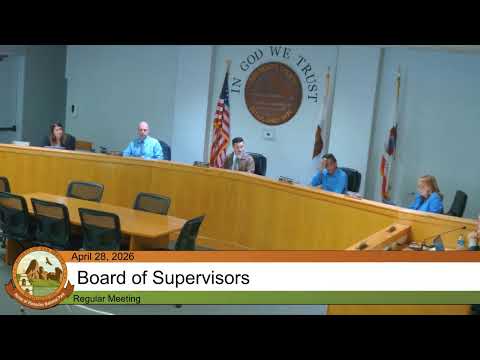
The San Bonito County Board of Supervisors on April 28 adopted a nonbinding Climate Roadmap designed to guide greenhouse-gas reduction efforts, position the county to compete for state and federal grants, and coordinate climate actions with regional partners.
County planner Abraham presented the roadmap as the product of a multi-year effort with Santa Clara County and technical consultants, funded through an EPA Inflation Reduction Act planning subgrant. Consultant Ryan Gardner said the roadmap translates regional targets into county-scale measures such as reducing vehicle miles traveled, partnering with the community choice aggregator (3CE) on clean electricity, and expanding carbon sequestration through agricultural practices and tree planting.
The roadmap is explicitly nonbinding, staff and consultants said; adoption will not by itself create mandates for residents or businesses. Selena Stoler, Integrated Waste Management manager, said the document is intended to be a planning framework that improves grant competitiveness and informs future ordinance or program decisions. 3CE's Sophia Schwarzky told supervisors the agency supports adoption and highlighted programs that could deliver money and technical assistance to San Bonito, including electrification rebates and farm equipment decarbonization funding.
Supervisors questioned whether adoption would trigger state mandates or immediate obligations. Staff and county counsel said the roadmap would not obligate the county to take specific actions; any individual grant application, program or ordinance would return to the board for separate consideration. Board members also asked about the amount of grant funding already secured; staff said recent regional grants totaled several million dollars and that a three-year regional partnership would be presented to the board for membership funding.
The board voted unanimously to adopt the roadmap and directed staff to pursue grant opportunities, return with an annual update, and report back on implementation options and potential costs.
What's next: staff will pursue grant applications and return to the board with implementation priorities, potential budget impacts and an annual progress report.