Get Full Government Meeting Transcripts, Videos, & Alerts Forever!
Get email alerts on the Resilience topic
No spam. Unsubscribe anytime.
Commission approves $20M seed for resilience program to accelerate canal, pump repairs
Summary
The Broward County Commission directed staff to develop a resilience implementation program and approved a one‑time $20 million reserve transfer (with conditions) to leverage local, state and federal grants for canal, pump and stormwater capital projects aimed at reducing flood risk countywide.
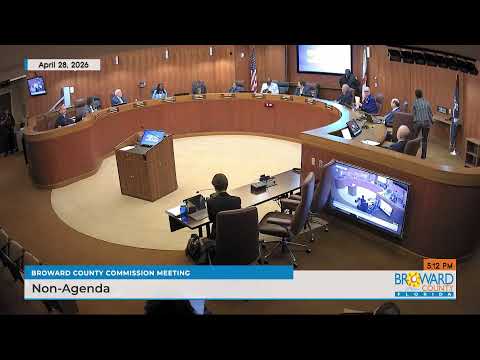
The Broward County Commission on April 28 directed county staff to develop a resilience implementation program based on the county’s 2025 resilience plan and approved a one‑time allocation to fund an initial implementation effort.
The board authorized county administration to produce a program that prioritizes “tier one” capital projects — pumps, culverts and water‑control structures — and to return to the commission with detailed project lists, draft request‑for‑applications and matching and scoring rules. The motion that passed included a requirement that final awards, contracting and detailed project selections come back to the board for approval.
Dr. Jennifer Herado, Broward County’s resilience director, told commissioners the county’s 1,800‑mile canal system is aging and “if we do not act now, within 10 years every neighborhood is at risk of massive flooding.” She and other county staff outlined how $20 million in county seed money could be used to attract five‑to‑seven‑to‑one matches from municipalities and grant programs to create larger capital packages.
Business and civic leaders from the Broward Workshop and several municipalities urged speed and scale. The Broward Workshop’s Alan Hooper and other business speakers said early action both reduces long‑term costs and increases the county’s chance of winning federal and state grant matches.
Commissioners debated financial safeguards and project selection. Several asked that the funds be explicitly targeted to canal system priorities and that the county require minimum matches and robust reporting. The final motion capped the initial county commitment as a one‑time allocation and required the administration to return with an implementation plan that specifies project eligibility, matching requirements and award processes.
The board also directed staff to pursue grants and leverage the seed funds to maximize federal and state matches. Commissioners emphasized the need to coordinate with municipalities and water‑control districts and to deliver projects that can be started quickly to avoid cost escalation.
Next steps: county administration will return with the resilience implementation plan, project scoring and a recommended award pathway for the board to review and approve.