Get Full Government Meeting Transcripts, Videos, & Alerts Forever!
Get email alerts on the Animal Control topic
No spam. Unsubscribe anytime.
Council downgrades boxer ‘Lawrence’ from ‘dangerous’ to ‘potentially dangerous’ pending attorney sign-off
Summary
After rescue groups and animal control disputed bite evidence, the New Prague City Council voted 5-0 to downgrade a dangerous-dog classification to potentially dangerous to allow transfer to rescue pending confirmation from the city attorney and safeguards on tracking and liability.
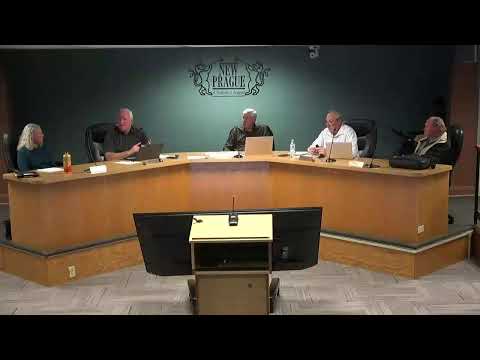
The New Prague City Council voted unanimously to change the classification of a boxer named Lawrence from “dangerous” to “potentially dangerous,” allowing a rescue to take custody while staff and the city attorney clarify liability and tracking procedures.
Carla Linderhome, who identified herself as the dog’s former owner and gave her address, told the council she had surrendered Lawrence to Minnesota Boxer Rescue and then placed him with trainer Darren at Unleashed for evaluation. “We decided that we couldn't take that. We just weren't the right home for him,” she said, describing the dog’s quarantine and training history and asking the council to remove the dangerous label so a rescue could safely rehome him.
Sandra Steinmets, who identified herself as the owner of Minnesota Critter (the city’s animal-control contractor), described the classification process under local practice and state statute and explained that a dog can be designated dangerous after an initially “potentially dangerous” finding and a subsequent incident. She said the dog had been quarantined and assessed and that Critter Getters had recommended training. “When Lawrence came in the first time, yes, he was hyper. He was young. ... The second time we understand that the leash broke, Lawrence got loose, went after a lady with a dog,” Steinmets said, explaining how the incidents led to the dangerous designation.
Representatives of Minnesota Boxer Rescue disputed the severity of the documented injuries and offered to take responsibility for Lawrence’s training and placement. Brenda Belrode, who said she is the rescue’s vice president, said the police photo “is not a dog bite” and that rescue staff and local trainers do not view Lawrence as aggressive. Jay Lawson, the rescue’s placement director and intake coordinator, added that the police report later noted the resident said she had not found blood on her dog.
Council members expressed sympathy for the dog and residents and repeatedly asked staff to confirm whether changing the designation would create legal liability for the city. Josh (city staff) said he had reviewed the relevant city ordinance and state statute and that animal-control decisions are generally made by the contractor; he agreed to consult the city attorney to nail down liability and to work with animal control on a tracking procedure if the downgrade proceeds. One councilor suggested requiring the rescue or new owner to carry liability insurance; staff noted the city's code permits a council-mandated liability policy for new owners in dangerous-dog cases.
A motion by Council member Maggie Bass, seconded by Rick Syler, asked to remove the dangerous-dog designation and set Lawrence to potentially dangerous “based on the recommendation from our legal counsel” with staff to follow up on liability and tracking. The motion passed 5-0.
The council’s action does not equate to removal of the historical record: staff and Critter Getters said the facts of the prior incidents remain in the record, and Minnesota Critter noted that state statute limits how and when the dangerous label may be removed. Staff said animal control may review a dog six months after designation and recommend change if training and evidence justify it. The council’s decision is conditioned on the city attorney’s confirmation and on agreed follow-up steps to document where the dog will be housed and who will adopt him.
Next steps: Staff will consult the city attorney on liability and work with the animal-control contractor and the rescue to develop a tracking and follow-up plan; the change to potentially dangerous will take effect only after staff confirms those safeguards.