Get Full Government Meeting Transcripts, Videos, & Alerts Forever!
Get email alerts on the Road Use Charging topic
No spam. Unsubscribe anytime.
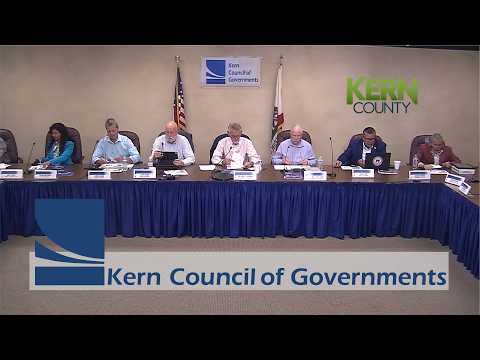
State road‑use charging presented to Kern COG; officials discuss per‑mile fee, privacy and rural impacts
Summary
A state presenter explained California’s road‑use charge pilots to the Kern Council of Governments, describing a per‑mile alternative to the gas tax, multiple mileage‑reporting options to protect privacy, and findings on rural and equity impacts; board members asked about local allocations and enforcement.
Lauren, a presenter for the state's road‑use charging research, told the Kern Council of Governments that California is studying a per‑mile charge as a revenue‑neutral alternative to the gas tax to stabilize transportation funding as vehicles use less fuel.
"What this is is basically a per mile fee," Lauren said, explaining the proposal would shift collection from a per‑gallon tax to a per‑mile system so that all vehicles contribute similarly regardless of fuel source. She added the state's pilots test rate structures, reporting options and community impacts.
Lauren summarized four California pilots and said the first, in 2016–17 with about 5,000 participants, demonstrated feasibility but left open questions for further study. She described a 2021 legislature‑directed pilot that collected money from participants to test revenue flows and rate options and said a report from that work is expected later this year.
On equity, Lauren said research shows current gas‑tax burdens are uneven: "those in low efficiency vehicles who are driving more tend to be either in rural areas or in disadvantaged communities," and a per‑mile design would shift the distribution of payments so some drivers—particularly high‑efficiency or electric vehicles—would pay more than under the current gas tax while others would pay less.
Board members pressed on practical matters. Phil Smith (from Tachby) asked how miles would be attributed to state versus local roads and how cities would get their share; Lauren said more‑granular data is possible under higher‑tech reporting options but that collection design and allocation formulas would be set legislatively. On enforcement, Lauren said account managers would bill users and nonpayment would be enforced through DMV registration holds.
The presenter emphasized privacy and choice: pilots tested low‑tech options such as odometer photos and shop reads as well as plug‑in OBD2 devices and in‑vehicle telematics so drivers could pick lower‑data reporting if they prefer. She said legislators are likely to consider whether reporting options should carry the same administrative cost for users.
Lauren closed by noting road‑use charging is one of several ideas under discussion at the state level — others include higher registration fees or charges on electricity — and that no legislative decision has been made. The board was directed to the state's roadcharge website for pilot reports and the public calculator.
Next steps: the state report from the 2021‑directed pilot is expected later this year; any permanent change would require legislative action.