Get Full Government Meeting Transcripts, Videos, & Alerts Forever!
Get email alerts on the Npt Consensus Jcpoa topic
No spam. Unsubscribe anytime.
Grossi says war complicates NPT consensus; JCPOA no longer sufficient basis, verification needed
Summary
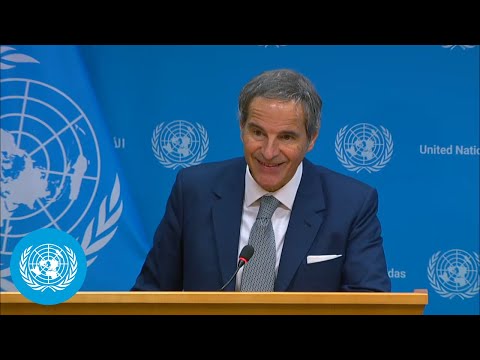
At the NPT review conference press briefing, DG Grossi said the war has undercut past consensus at the UN on Iran, warned of proliferation incentives from rising mistrust, and said the JCPOA cannot serve as a negotiating foundation today because Iran’s program and technology have evolved; he repeated that nuclear facilities should not be attacked and urged verification.
IAEA Director-General DG Grossi told reporters that the ongoing war has complicated efforts to build consensus at the NPT Review Conference and that verification will be indispensable for any future agreement.
Grossi said that, unlike in the past when the Security Council often adopted resolutions on Iran without a vote, ‘‘the common denominator among the membership and in particular the five permanent members of the Security Council is no longer there.’’ He said that does not prevent work to ‘‘reconstruct some degree of consensus’’ but makes it more difficult.
On the JCPOA, Grossi said the 2015 deal reflected a different technical baseline — a smaller Iranian program with fewer centrifuges — and that Iran’s program has ‘‘exponential progress’’ in recent years with new centrifuge types and additional facilities, so the JCPOA ‘‘could not constitute a basis’’ for current negotiations. He emphasized that any future arrangement will require a ‘‘very robust inspection system.’’
Grossi also affirmed the IAEA’s view — reflected in international law and past IAEA General Conference resolutions — that nuclear facilities should not be attacked, though inclusion of such language in a RevCon outcome document is a matter for the conference delegates.
On proliferation risk, Grossi warned that ‘‘because of the growing tensions ... countries may find incentives to revisit their past abstention from going to nuclear weapons,’’ and he urged recommitment to the norm of non‑proliferation.
Grossi declined to comment on public judgments by national leaders about past deals but named his interlocutors in current discussions on Iran as Iran’s Foreign Minister Dr. Abbas Araghchi and U.S. representatives Ambassador Steve Witcoff and Dr. Kushner; he said the IAEA is consulting both sides though not formally a negotiating party now.
The briefing ended after a series of questions by international media.