Get Full Government Meeting Transcripts, Videos, & Alerts Forever!
Get email alerts on the Power Sector Reliability topic
No spam. Unsubscribe anytime.
Subcommittee chair frames bills to shore up power sector as AI and data-center demand rises
Summary
The chair of a House Energy and Commerce subcommittee opened a hearing outlining four bills intended to address electric reliability and grid planning as data-center growth and AI workloads expand demand; he cited a NERC assessment and Lawrence Berkeley National Lab findings.
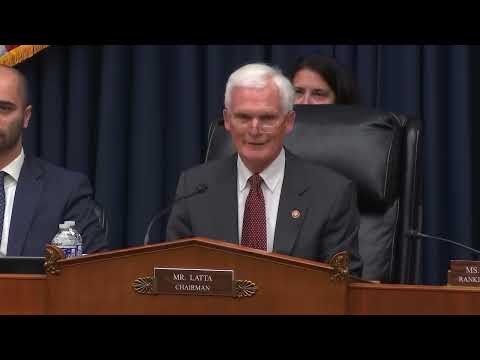
The chair of the House Energy and Commerce subcommittee opened the legislative hearing by saying the panel would consider proposals to improve the power sector amid historic low growth and rising affordability challenges. "Access to reliable, affordable energy is the linchpin to U.S. leadership in AI development," the chair said, tying grid reliability to the nation’s economic and national-security goals.
The statement framed AI and expanding data-center loads as both an economic opportunity and a stressor on the grid. The chair warned that foreign competitors are investing heavily in AI, calling out "Russia and Communist China" as actors that could use AI to disrupt global economies. He said the committee must ensure that interconnecting new data centers produces benefits for households through grid modernization and more dispatchable resources, citing "Lawrence Berkeley National Lab and others" as finding that data-center load growth can lessen retail electricity costs.
The chair also cited reliability metrics from the North American Electric Reliability Corporation, saying a recent assessment estimated peak demand over the next ten years could grow by 224 gigawatts while roughly 105 gigawatts of dispatchable generation are expected to retire, creating what he characterized as a potential 329-gigawatt shortfall. He said prior congressional efforts had sought to address that gap and described four bills the subcommittee will consider: the Ratepayer Protection Act (intended to require states to adopt policies to prevent households from bearing data-center energy costs), the Load Forecasting Enhancement Act (to promote bottom-up demand planning), the Fair Allocation of Interstate's Rates Act (to place renewable portfolio standard costs on states that choose to adopt them), and the Advanced Transmission Technologies to Reduce Rates Act (to leverage Department of Energy work on advanced transmission technologies).
The chair framed these bills as complementary approaches — from state-level protections to planning improvements and transmission upgrades — aimed at keeping electricity affordable and reliable as demand grows. He concluded by saying he looked forward to testimony from witnesses scheduled to appear later in the hearing. The transcript provided only the opening statement and did not include witness testimony or any votes.