Get Full Government Meeting Transcripts, Videos, & Alerts Forever!
Get email alerts on the Food Assistance topic
No spam. Unsubscribe anytime.
Scores of New Haven residents urge aldermen to restore $500,000 for coordinated food assistance
Summary
More than two dozen residents and organization representatives implored the Finance Committee to restore a recurring $500,000 allocation for coordinated food assistance, citing rising food insecurity, increased pantry demand, and gaps in federal support.
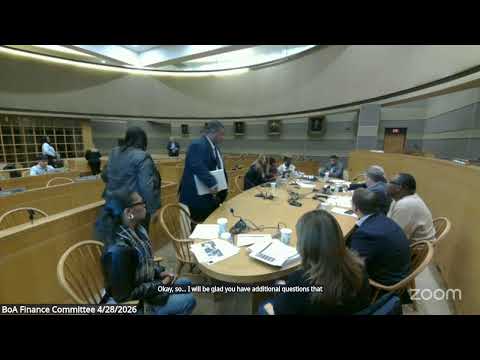
Dozens of residents and nonprofit representatives told the Finance Committee on April 29 that restoring $500,000 in annual city funding for coordinated food assistance is essential to keep pantries stocked, support school-break grocery programs and meet an increasing demand driven by rising prices and changes to federal benefits.
Alicia Santilli, co-chair of the Coordinated Food Assistance Network (CFAN), described last year's allocation — about $482,439 in combined general-fund and CDBG dollars — and said the funding supported school-break grocery programs that served 5,276 students in a four-month window. "The funding we were allocated over this past year went to extremely important initiatives," she said, and asked the committee to restore $500,000 in the FY27 budget.
Speakers representing soup kitchens, the United Way, food pantries, faith congregations and volunteer networks described repeated pantry visits, a surge in working families relying on emergency food, and a strain on distribution infrastructure. "I had to go to the food pantries three times this month to supplement SNAP," said Kim Hart, who gave a first-person account of rising grocery costs and repeated reliance on emergency food. Representatives from Fish, Elm City Harvest and other food-recovery groups described how modest city investments enabled bulk purchases, expanded client-choice distribution and homebound deliveries for hundreds of households.
Several witnesses framed the request as an investment with multiple returns: better nutrition, reduced downstream health and policing costs, and support for local food procurement that benefits farmers and small food businesses. United Way and other back-office providers described accountability structures for the funding and said last year's allocation was tracked and used for direct food purchases, outreach, and SNAP navigation assistance.
Committee members listened and asked clarifying questions about the uses of prior funding and the scale of demand. The Finance Committee did not decide on the funding level at the meeting; budget deliberations were scheduled for upcoming sessions when aldermen will weigh competing priorities across departments.