Get Full Government Meeting Transcripts, Videos, & Alerts Forever!
Get email alerts on the Public Safety topic
No spam. Unsubscribe anytime.
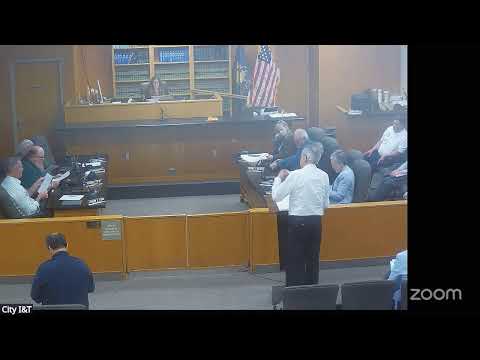
Council advances higher false-alarm penalties after debate on commercial vs. residential impacts
Summary
Council advanced Ordinance 5261 on first reading to raise fees for repeat false alarms (third/fourth alarms to $150; fifth+ to $200). Debate focused on whether the tiered penalty structure unfairly burdens tenants and small landlords and on how the city identifies responsible parties.
On April 27 the council advanced Ordinance 5261 on first reading to increase penalties for repeat false alarms at properties. The proposed change raises the fee for the third and fourth false alarm in a calendar year to $150 (from $100) and raises the fee for fifth and subsequent false alarms to $200 (from $150).
Council discussion centered on who ultimately pays and how the penalty is applied: whether penalties should be assessed at the building level or to specific units within multi-unit properties, how alarm companies and property management practices affect repeat calls, collection challenges and life-safety exceptions. Fire and police officials said incidents involving actual smoke, fire, carbon monoxide or other threats are excluded from being coded as false alarms; routine false alarms are those dispatches that result in no required mitigation activity.
Landlord and property managers raised equity concerns. Alan Grezer, speaking as a representative of a landlord management firm, said large corporations can absorb small fines while lower‑income tenants may be unfairly penalized: "The affordable housing tenant who has no income is on fixed income ... and the poor soul who hasn't done anything wrong for five years is the one who gets socked with $250." He urged greater differentiation between commercial/manufacturing properties and residential units, and better data on which units trigger alarms so the city can target remedies.
Officials said the ordinance contains appeal provisions and operational discretion; the city can waive fees in certain circumstances, and departments may wave charges when there are health or service reasons. The first-reading vote moved the ordinance forward with a roll-call that showed a split among councilors on advancing the measure on first reading; the council did not have unanimous consent but voted to move it forward.
Next steps: staff will continue working on alarm-code classification, data reporting for alarm sources and the appeals process. Council suggested a future briefing that disaggregates alarm incident data (residential vs. commercial) and collection success rates.